
Driving guide
Driving in Japan as a visitor: a practical Aichi guide
Aichi is one of the easiest places in Japan to start driving: wide roads, good expressways and plenty of parking outside the city. This guide follows the order you'll meet things in — the paperwork, the rental desk, the toll gate, the first stop sign, the petrol pump and the last narrow lane to your door.
Check dates on Airbnb
1. Before you fly: the right licence
Japan accepts two kinds of foreign paperwork, and which one you need depends on where your licence was issued.
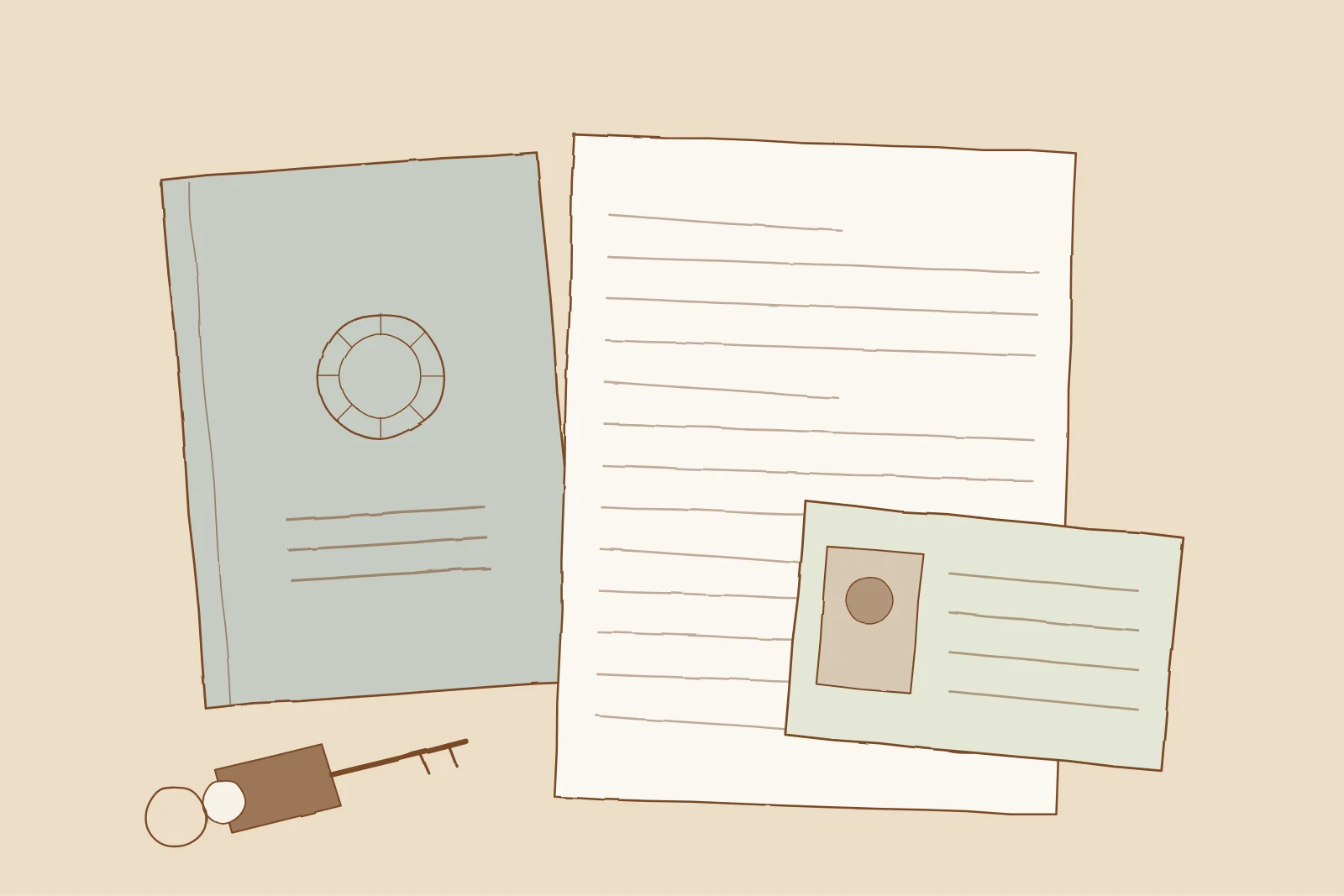
- An International Driving Permit (IDP) issued under the 1949 Geneva Convention. This is the route for drivers from Hong Kong, Singapore, Australia, the US, the UK, Korea, Thailand and many other places. Get it at home before you travel — it cannot be issued in Japan.
- Your licence plus an official Japanese translation, if it was issued in Taiwan, Switzerland, Germany, France, Belgium or Monaco. The translation must come from an approved body — for example the issuing authority or embassy, the Taiwan-Japan Relations Association for Taiwanese licences, or JAF.
Either way, you can drive for up to one year from the day you land, or until the permit or licence expires — whichever comes first. Licences from mainland China cannot be used in Japan, so in a mixed group someone else will need to drive.
Pack them together
Keep the IDP (or translation), your home licence and your passport in one pouch. You'll show them at the rental desk, and you'll want them to hand if you're ever stopped.
2. At the rental desk: three things to ask for
Many visitors to Aichi pick up their car at Chubu Centrair International Airport, about 35 minutes from Hanaike Retreat. Before you sign, make sure the booking includes:
- An ETC card for electronic tolls. Most major rental companies lend one as an add-on — often around ¥330 — and you settle the tolls when you return the car. (More on why this matters in 2026 below.)
- Child seats. In Japan, children under 6 must ride in a child seat, and it's the driver's legal responsibility. Reserve the number and sizes you need when you book; older children who are still small are safer in a booster too.
- Snow tyres if you're driving to Takayama, Shirakawa-go or Gero between December and March. Not every car has them, so choose them at booking rather than at the counter.
Then take two minutes in the car park before you drive off. Find the headlights, the hazard-light button and the fuel-flap release, and set the navigation to English if it offers it. In most Japanese-made cars the indicator stalk is on the right of the steering wheel and the wipers on the left — almost every first-timer turns on the wipers at the first junction. You will too, and that's fine.
3. Tolls and ETC: why the card matters in 2026
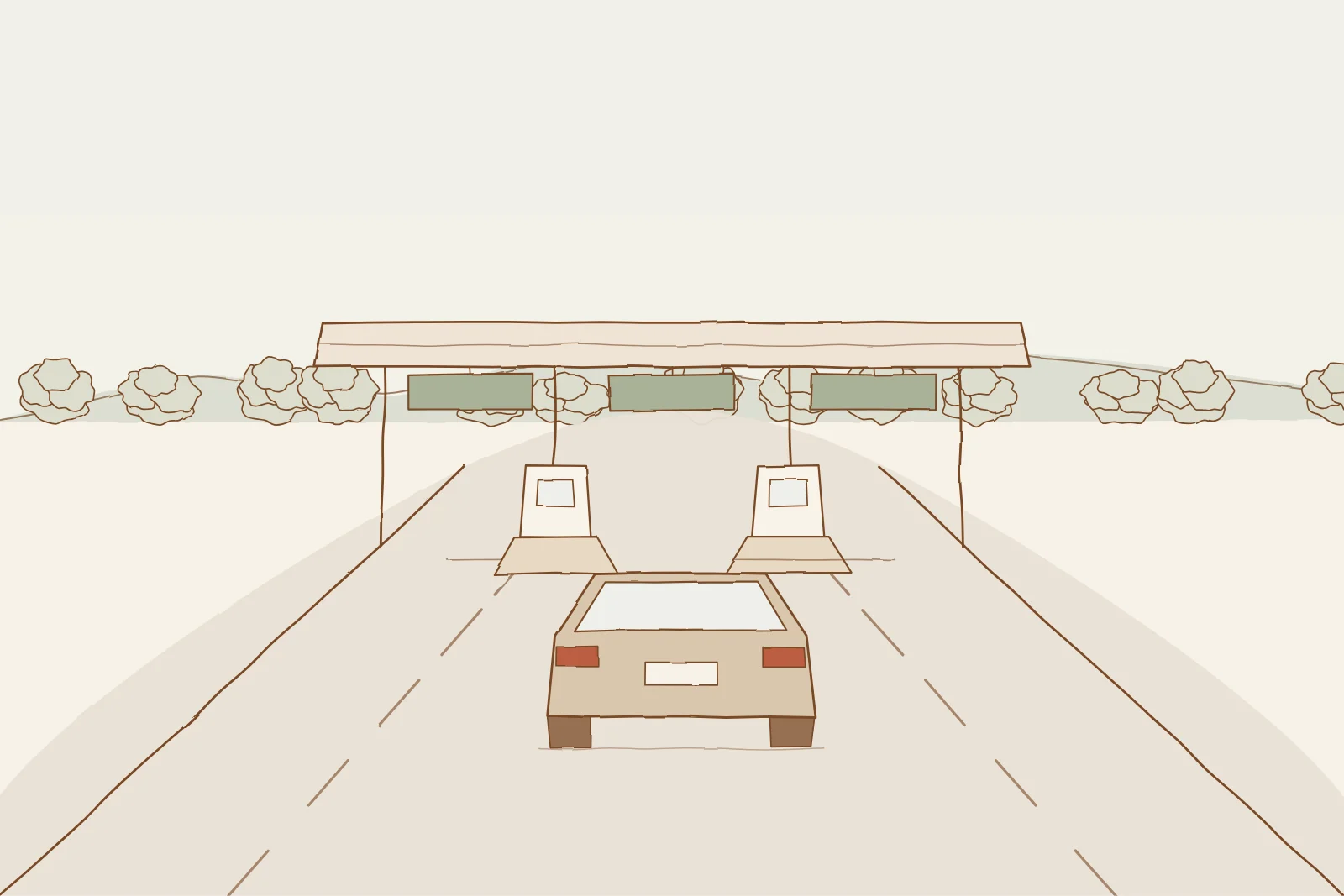
Japan's expressways are steadily switching to electronic toll collection. Between 9 March and 12 May 2026, NEXCO Central Nippon converted 35 more toll gates across its network to ETC-only, on routes including the Tomei, Shin-Tomei, Isewangan, Tokai-Hokuriku and Tokai-Kanjo expressways. These gates have no cash or staffed lanes. Kariya Smart IC, the exit 7 minutes from Hanaike Retreat, has always been ETC-only (open 24 hours, in both directions).
If you ever find yourself at an ETC-only gate without a working card, don't reverse. Drive into the lane marked "サポート" (Support), stop, and follow the signs or the staff's instructions.
Visitor expressway passes come and go. As of November 2026, the visitor passes Nippon Rent-A-Car offers cover only Hokkaido and Tohoku — not Aichi or Gifu — and the old Central Nippon Expressway Pass has been discontinued. Budget for tolls and ask your rental company what's available when you book.
4. On the expressway
Japanese expressways are smooth, and the direction signs carry place names in English as well as Japanese. A few habits help you blend in:
- Keep left. The right-hand lane is for overtaking. After you pass, move back promptly — cruising in the overtaking lane is itself an offence (a ¥6,000 fine for a car).
- Speed limits: unless a sign says otherwise, 100 km/h on intercity expressways and 60 km/h on urban expressways such as the Nagoya Expressway. On ordinary roads it's 60 km/h where there's a centre line — and from 1 September 2026, 30 km/h on roads with no centre line or median, which includes the lanes near Hanaike. A posted sign always wins.
- Take breaks at service areas (SA) and parking areas (PA): clean toilets, food, coffee and fuel on the larger ones.
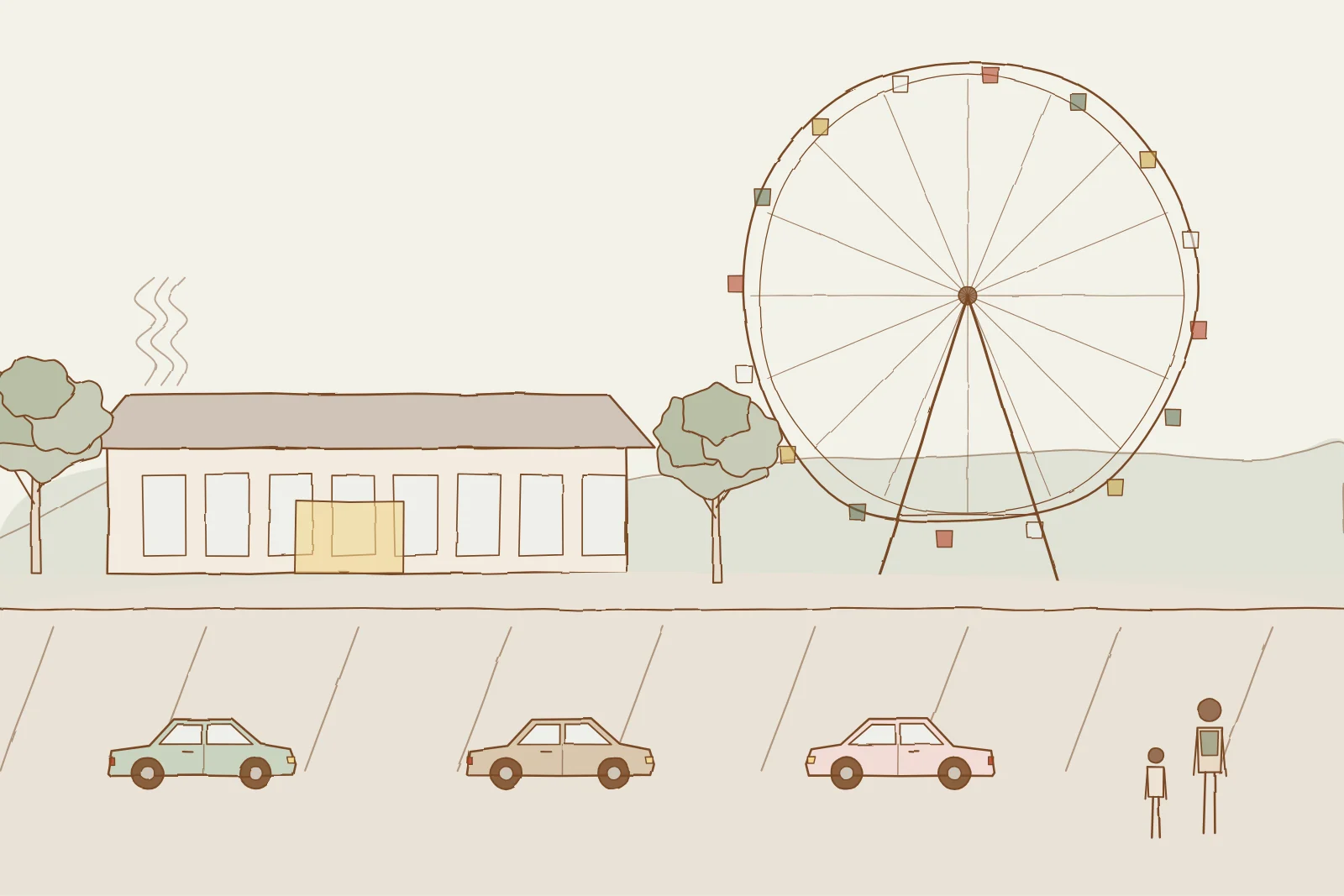
The friendliest first stop is Kariya Highway Oasis, 7 minutes from Hanaike Retreat. You can enter it from the Isewangan Expressway or from local roads, and it has a natural hot spring, a Ferris wheel, local food and souvenirs — a gentle place to stretch your legs after picking up the car.
5. The rules that surprise visitors
Japanese road rules are mostly what you'd expect. These are the ones that catch people out:
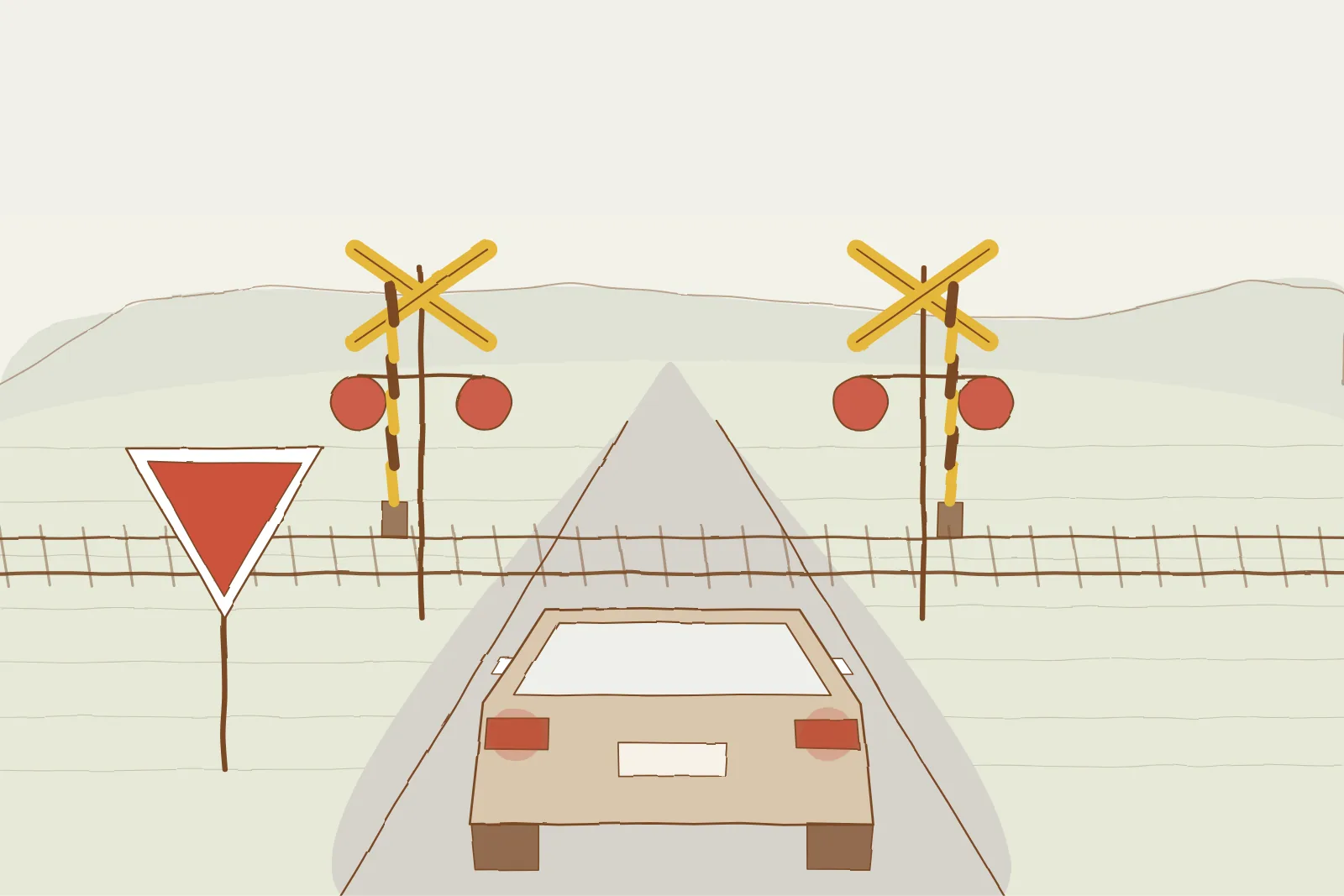
- Stop signs are red, upside-down triangles (marked 止まれ). A rolling stop counts as not stopping — come to a full halt and look both ways.
- Stop before every railway crossing, even when the barriers are up and no train is in sight — unless the crossing has its own traffic light showing green. Look, listen, then cross.
- No turning on red. Not left, not right. The only exceptions: you may turn in the direction of a green arrow, or turn left where a 左折可 ("left turn permitted") plate is posted.
- Pedestrians first. If someone is crossing — or about to cross — at a crossing, you must stop completely.
- Seat belts for everyone, front and back.
- Phones: holding a phone or looking at a screen while driving brings an on-the-spot fine (¥18,000 for a car) and penalty points. Set the navigation before you move.
- Alcohol: effectively zero. A breath reading of 0.15 mg/L counts as drink-driving, and driving with any alcohol in your system is prohibited. Passengers who ride along and people who serve the driver alcohol can be punished too. If you'd like a drink with dinner, plan a place you can walk to or call a taxi.
6. Filling up at a self-service station
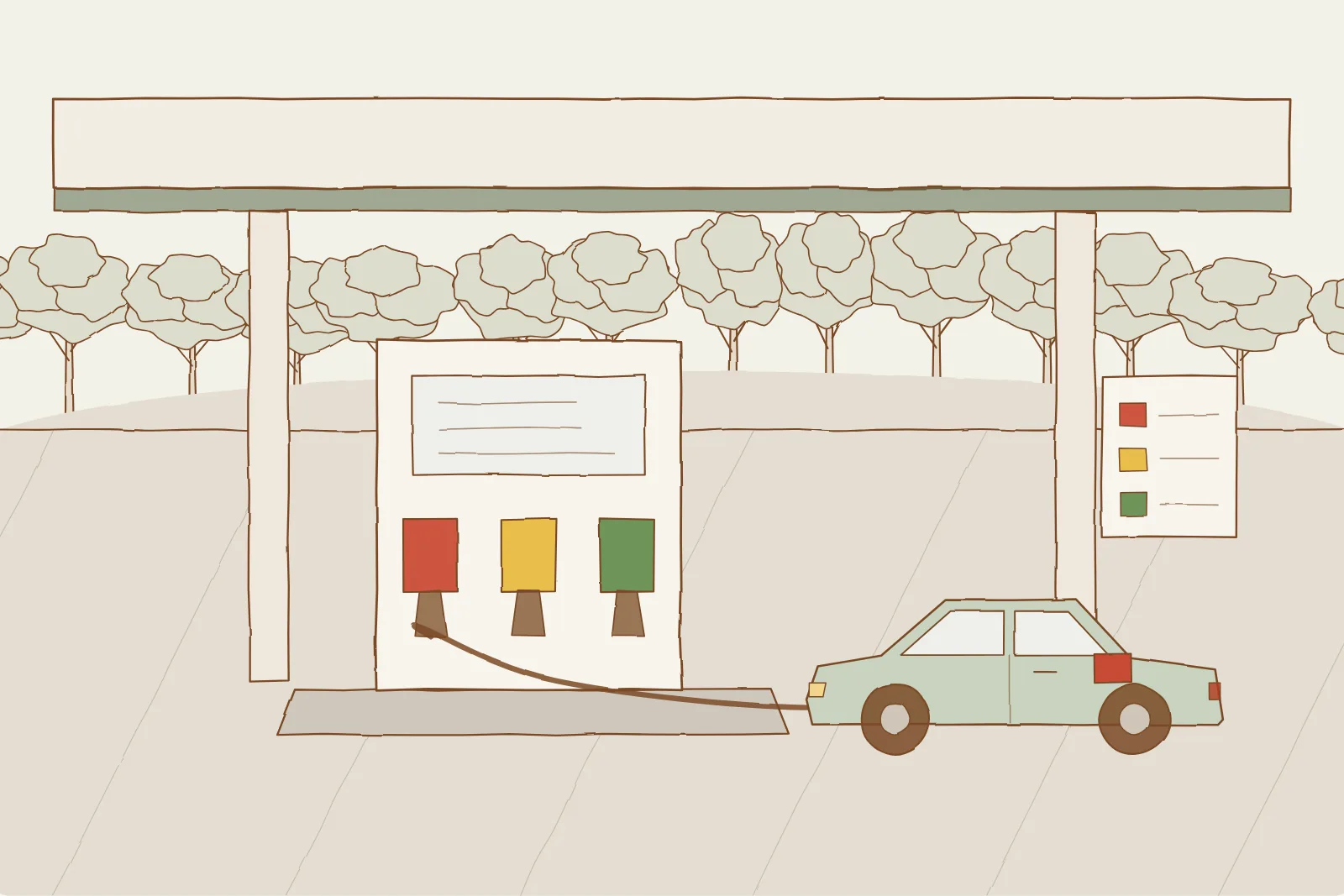
Many petrol stations are self-service (セルフ). The screens are mostly in Japanese, but the nozzles are colour-coded by law at self-service stations:
- Red: regular
- Yellow: high-octane
- Green: diesel
Ask at the rental desk which fuel your car takes, and check the nozzle colour before you squeeze. If your contract asks you to return the car full, fill up close to the rental office and keep the receipt.
7. Parking, and the last kilometre to Hanaike
In cities, park in a coin car park or a car park building rather than on the street. Outside the centres, most sights, restaurants and supermarkets have their own car parks.
At Hanaike Retreat, parking for two cars is free and right by the guesthouse. The last stretch is the only tricky bit: the lanes around the house are narrow, and if you search the address, map apps tend to send you to the south gate along a lane that's hard for a car. Instead, use the gate on the parking side (it has an intercom). These lanes have no centre line, so the limit is 30 km/h — take it slowly. We send a map of the recommended route after you book — if you can, arrive in daylight the first time.
8. Winter: the mountains are a different trip
Aichi itself rarely sees snow. The mountains to the north are another matter. For Takayama and Shirakawa-go, the road authorities ask every driver to fit snow tyres from December to March. During very heavy snow, some sections can be opened only to vehicles with chains — even if you have snow tyres — and main routes such as National Route 41 may close early for snow clearing. Rental cars usually come without chains, so if a chain rule is in force, take another route or wait. Check the forecast and road information the evening before, allow extra time, and keep a Plan B (Gero Onsen or a day in Aichi) in your pocket.
Our Takayama, Shirakawa-go and Gero guide has the details.
9. If something goes wrong
Breakdown or accident on an expressway:
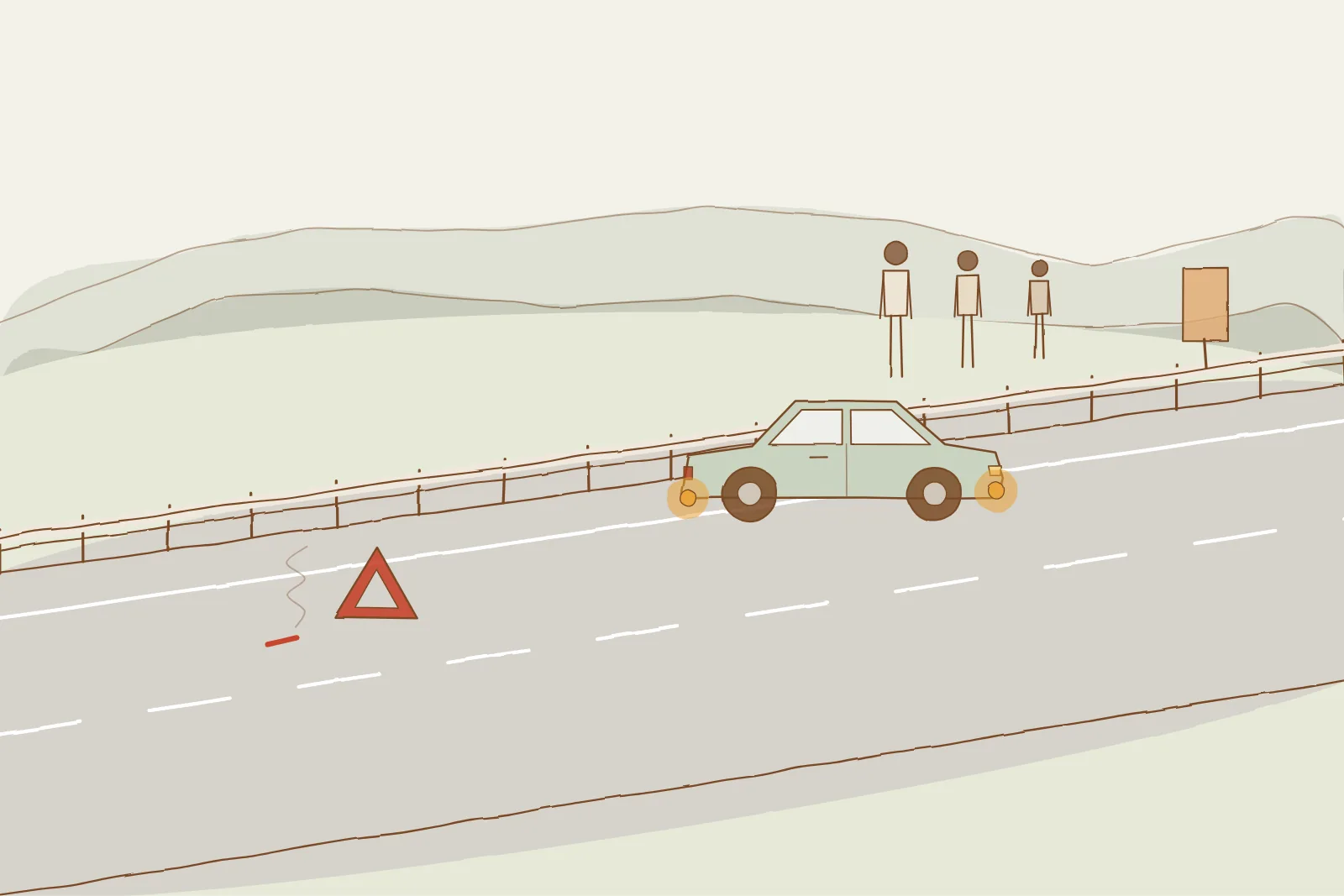
- Switch on the hazard lights and pull onto the shoulder.
- Warn the traffic behind: light the flare and set the warning triangle behind the car, walking on the far side of the guardrail.
- Everyone gets out and waits behind the guardrail — the car is not a safe place to wait.
- Then call: 110 (police), the roadside emergency phone, or #9910 (road emergency line).
Any accident, even a small scrape: help anyone who's hurt and call 119 for an ambulance if needed; move the car out of traffic if you can; and report it to the police on 110 — in Japan every accident must be reported, even with no injuries. Then call your rental company. Without a police report and that call, the rental insurance and damage waivers may not apply, so do both on the spot.
Staying with us? Send us a message on Airbnb too — we usually reply within two hours and can help explain things in Japanese.
Quick checklist
- IDP (1949 Geneva), or licence + official Japanese translation — plus your home licence and passport
- ETC card reserved with the car
- Child seats for every child under 6
- Snow tyres for the mountains, December–March
- Know the three rules: full stop at red triangles, stop at railway crossings, no turning on red
- Zero alcohol for the driver
- Your accommodation's parking details and route map
Ready to plan your stay?
See prices and open dates for your group on Airbnb. Up to 5 guests, 2 free parking spaces.
Check dates on AirbnbBooking, payment and support are handled by Airbnb.
More guides
 ItineraryA 4-day Nagoya & Aichi road trip, day by dayAichi's big sights are scattered: Ghibli Park in the wooded hills, LEGOLAND on the waterfront, two castles in two different cities. That is exactly why a car and one quiet base work so well. Here is a full four days with three nights at Hanaike Retreat — timings, drives, parking, food, and the swaps we'd make for rain, small children or grandparents.
 Road tripTakayama, Shirakawa-go and Gero Onsen by car: a Dragon Route road tripAichi sits at the start of the Dragon Route (Shoryudo), the tourism trail that winds north from central Japan through the mountains of Gifu to the Hokuriku coast. By car, three of its highlights — a hot-spring town, an old merchant town and a thatched-roof World Heritage village — fit neatly into two unhurried days.
 Family travelGhibli Park and LEGOLAND Japan with kids: an age-by-age guideGhibli Park isn't a ride park. It is five walk-in film worlds spread across a big, leafy park. LEGOLAND Japan is the opposite: compact, colourful and built for 2-to-12-year-olds. Here is what each age actually enjoys at both, which tickets to buy, how to handle strollers and naps, and a plan that leaves energy for tomorrow.
Sources: National Police Agency (driving with a foreign licence; drink-driving; phone use); Hokkaido and Kyoto Prefectural Police guides for foreign drivers (stop signs, railway crossings, red lights, seat belts, child seats, speed limits, reporting accidents); JAF (child seats); NEXCO Central Nippon (ETC-only gates 2026; what to do in an accident or breakdown); Nippon Rent-A-Car (expressway passes; chain regulations; accident procedure); Takayama National Highway Office via Hida City (snow tyres, December–March). Checked November 2026 — rules and prices can change.