
Through the year
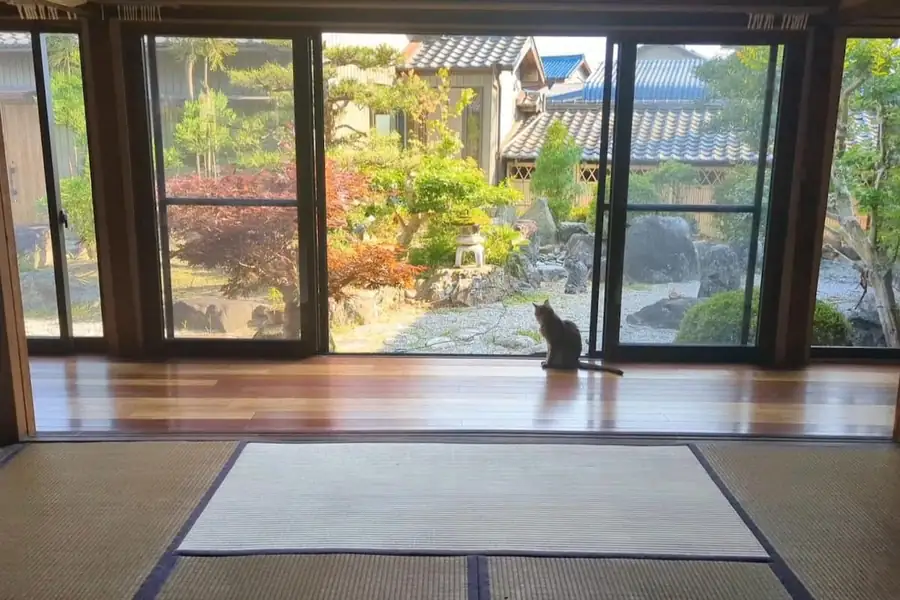
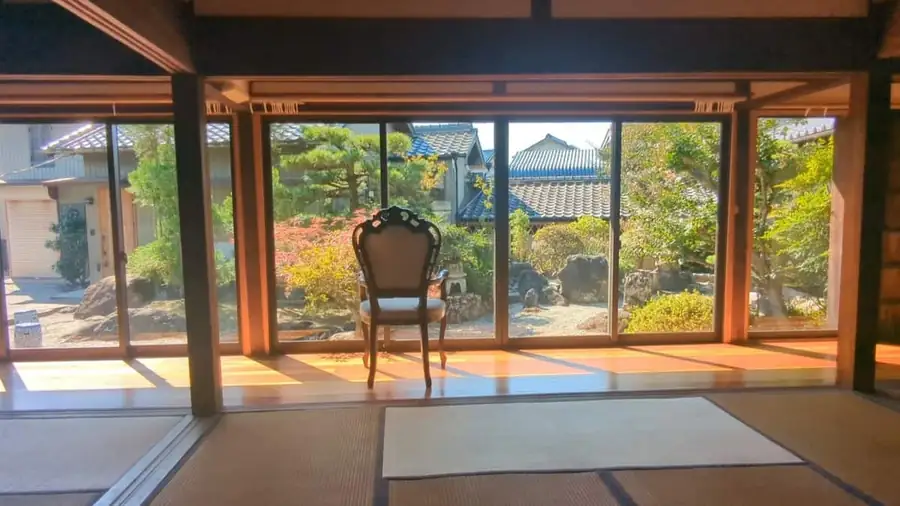
Through the seasons — and a day at Hanaike
Spring blossoms, wild irises, giant paper lanterns in July, golden rice fields and a crisp winter garden. Here is what each season brings around the house and across Aichi, what the weather is like, and how a day here can flow.
Check dates on Airbnb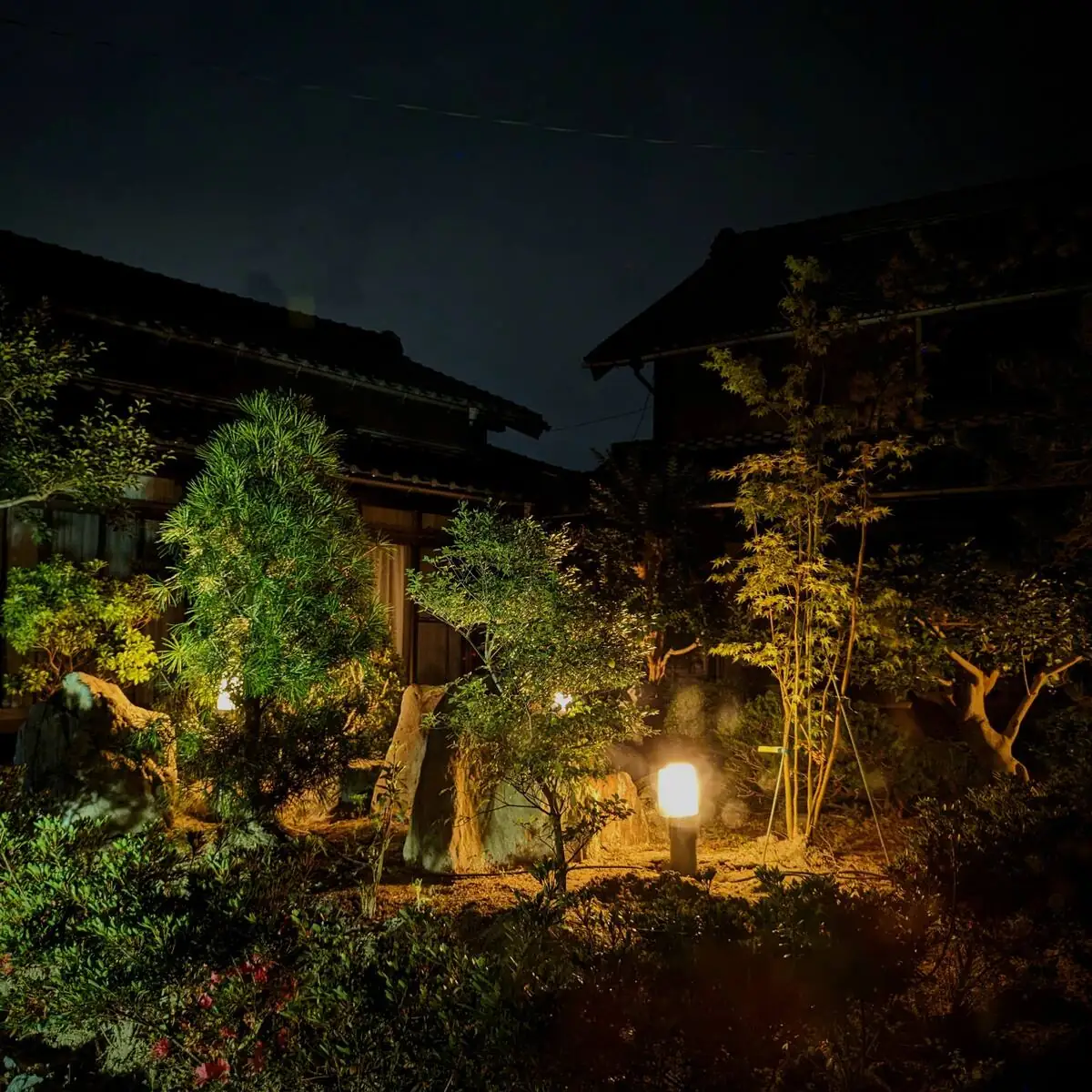
The seasons
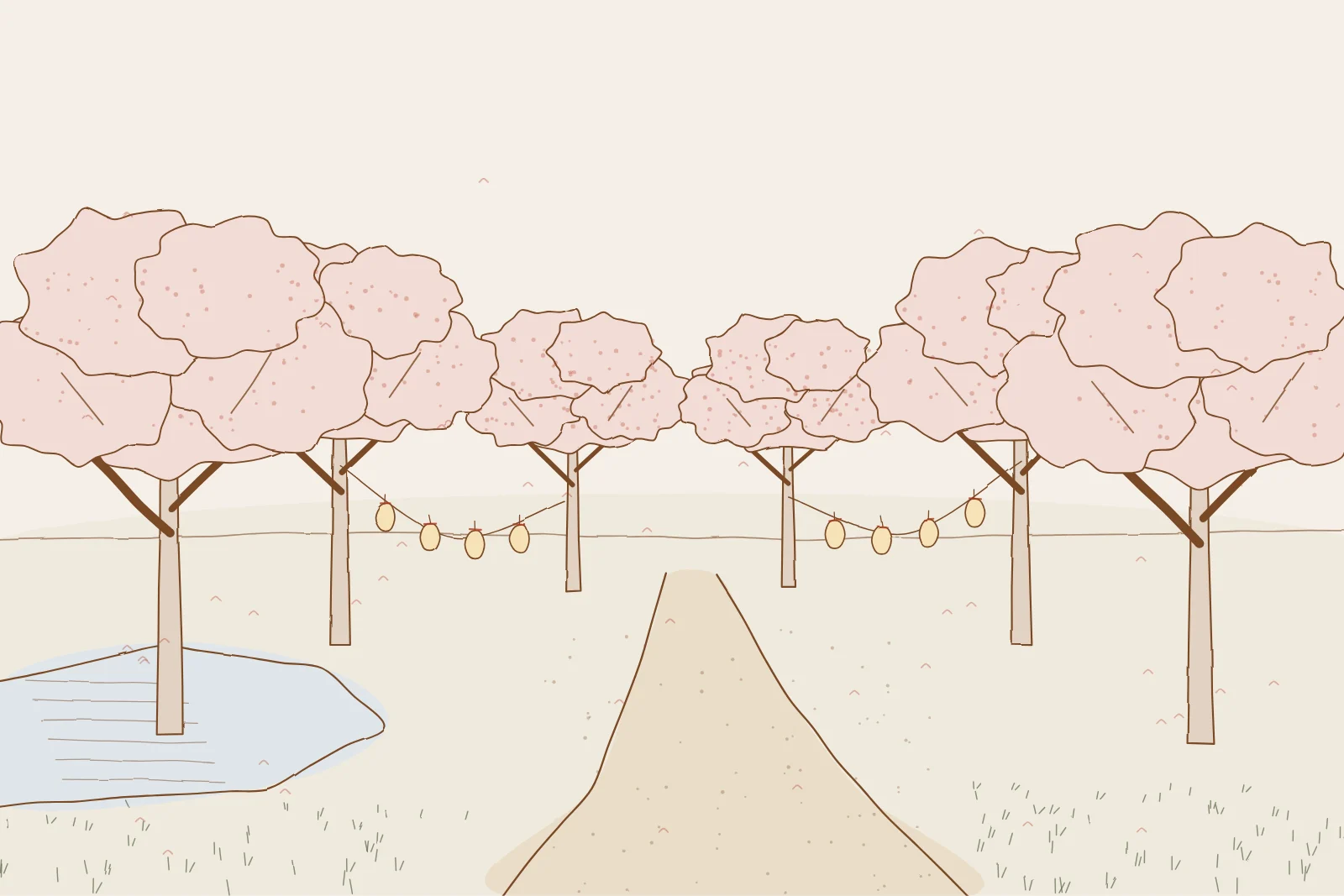
Cherry blossoms at Suhara Park
About 420 cherry trees, lit with lanterns for night viewing. About 10 min by car.
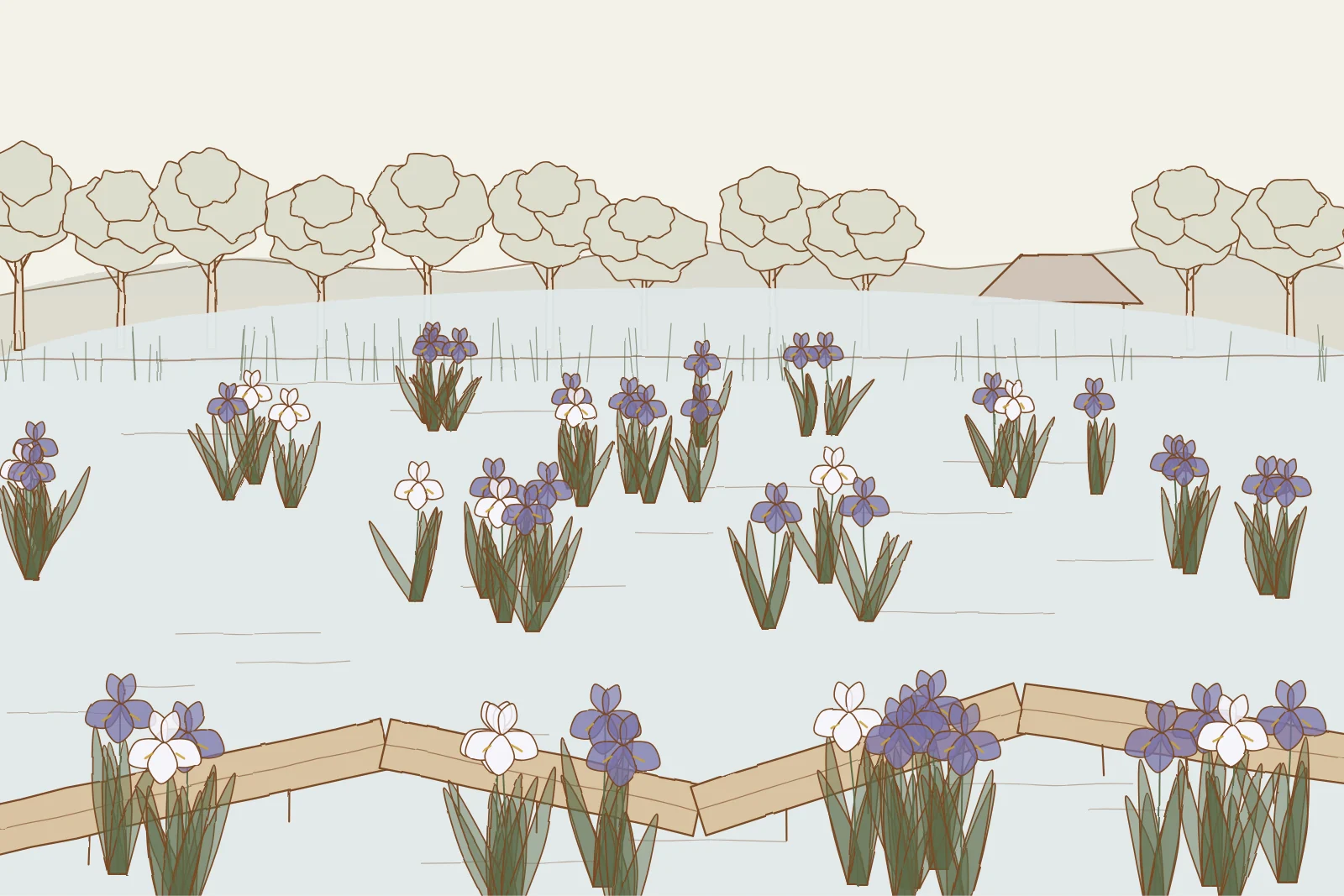
Irises at Kozutsumi-nishi Pond
A National Natural Monument and one of Japan's three great wild iris habitats. About 10 min by car — but during the bloom, private cars are restricted near the pond: park at Suhara Park (No. 2 car park) and walk about 10–15 min.
Lantern festival and fireworks
Giant paper lantern figures dance through central Kariya on the last weekend of July, and the Kariya Wansaka Festival lights up the sky in August (check the date).
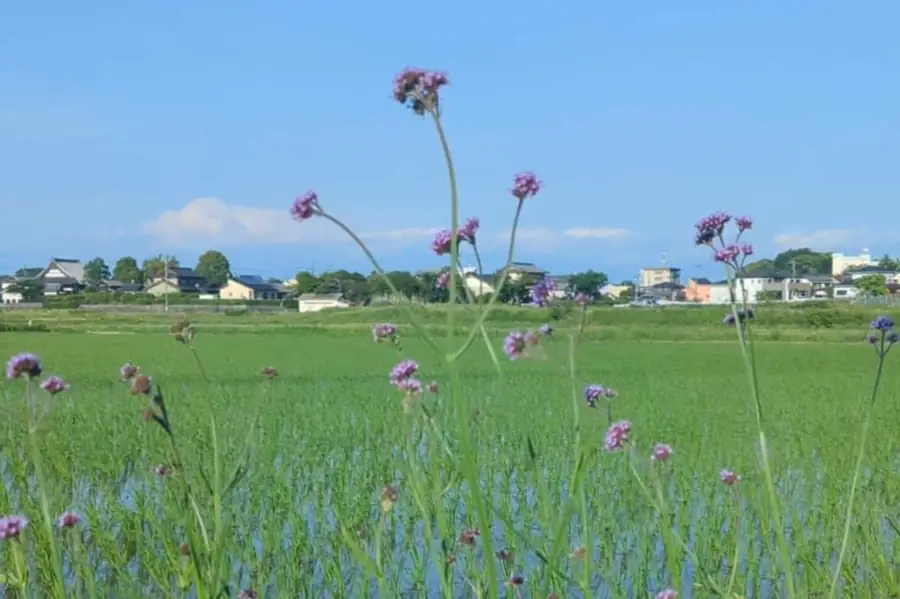
Golden rice fields and autumn leaves
The fields around the house turn gold. In November, Korankei Gorge (about 45 min) is one of Aichi's famous autumn-leaf spots.
The garden in crisp winter air
Clear, still days that show the shape of every tree, seen from a warm, well-insulated room. Snow falls only a few times a year — if you see it, consider yourself lucky.
Month by month
Average temperatures are the Japan Meteorological Agency's normals for Nagoya, the nearest major weather station. Event dates are for 2026–27 where known; they change a little each year.
- January (avg. 4.8°C) — The coldest, driest month: clear skies and a sharp, quiet garden. Nabana no Sato's illuminations continue (closed 6–7 Jan 2027). Ise Grand Shrine is at its busiest over New Year
- February (avg. 5.5°C) — Still cold and mostly dry. A good month for unhurried day trips and evening illuminations
- March (avg. 9.2°C) — Cherry blossoms begin in late March. At Korankei, small purple katakuri flowers carpet the slopes from late March
- April (avg. 14.6°C) — Cherry season into early April, including night viewing at Suhara Park. Mild days for walking
- May (avg. 19.4°C) — Wild irises at Kozutsumi-nishi Pond in mid to late May (park at Suhara Park and walk). Nabana's illumination season ends on 31 May 2027
- June (avg. 23.0°C) — Rainy season brings more rain, and the rice fields around the house turn a fresh green
- July (avg. 26.9°C) — Hot and humid. Kariya's Mando Festival fills central Kariya on the last weekend of July
- August (avg. 28.2°C) — The hottest month. Kariya Wansaka Festival fireworks (check the date)
- September (avg. 24.5°C) — The wettest month on average, with typhoons possible. The rice fields begin to turn gold
- October (avg. 18.6°C) — Comfortable and clear. Nabana no Sato's illuminations open (17 October in 2026)
- November (avg. 12.6°C) — Autumn leaves: the Korankei Momiji Festival runs all month (1–30 Nov 2026), and Obara's autumn-flowering cherries (in bloom from late October, usually best mid to late November)
- December (avg. 7.2°C) — Obara Shikizakura Festival until 6 December. Nabana lights its autumn leaves until about late December, with special Christmas opening on 23–25 December
Summer's giant lanterns
On the last weekend of July, young men carry mando through central Kariya — bamboo-and-paper figures about 5 metres tall and around 60 kg, each borne and danced by one person to flutes and drums. The Mando Festival of Akiba Shrine is a prayer against fire and is an Intangible Folk Cultural Property of Aichi Prefecture. In August come the Kariya Wansaka Festival fireworks — check the date for the year you visit.
Tap a photo to enlarge
Day trips by season
- November: Korankei autumn leaves — about 4,000 maples in a mountain gorge, about 45 minutes away. Weekends are busy on Route 153, so arrive early in the morning
- Late October to early December: Obara's four-season cherries — cherries that flower in spring and again in autumn, usually best mid to late November, alongside the maples
- Mid-October to May: Nabana no Sato's illuminations — a 200-metre light tunnel and one of Japan's largest water illuminations, along the same Isewangan Expressway as the house
- Year-round: Ise Grand Shrine — about 1 hour 50 minutes. The shrines close at 17:00 from October to December, so start early in those months
- Year-round, with care in winter: Takayama, Shirakawa-go and Gero Onsen — from December to March the mountain roads call for snow tyres
A day at Hanaike
- 15:00Arrive and unwind — make a Nespresso and enjoy the garden view.
- 16:00Walk Nishizakai — old temples and the Sakai River levee while it's still light (about 40 min).
- 17:30Kakitsubata hot spring — 7 min by car; soak away the journey.
- 19:00Dinner nearby — local spots 5–10 min by car; many close around 9 PM, so go early.
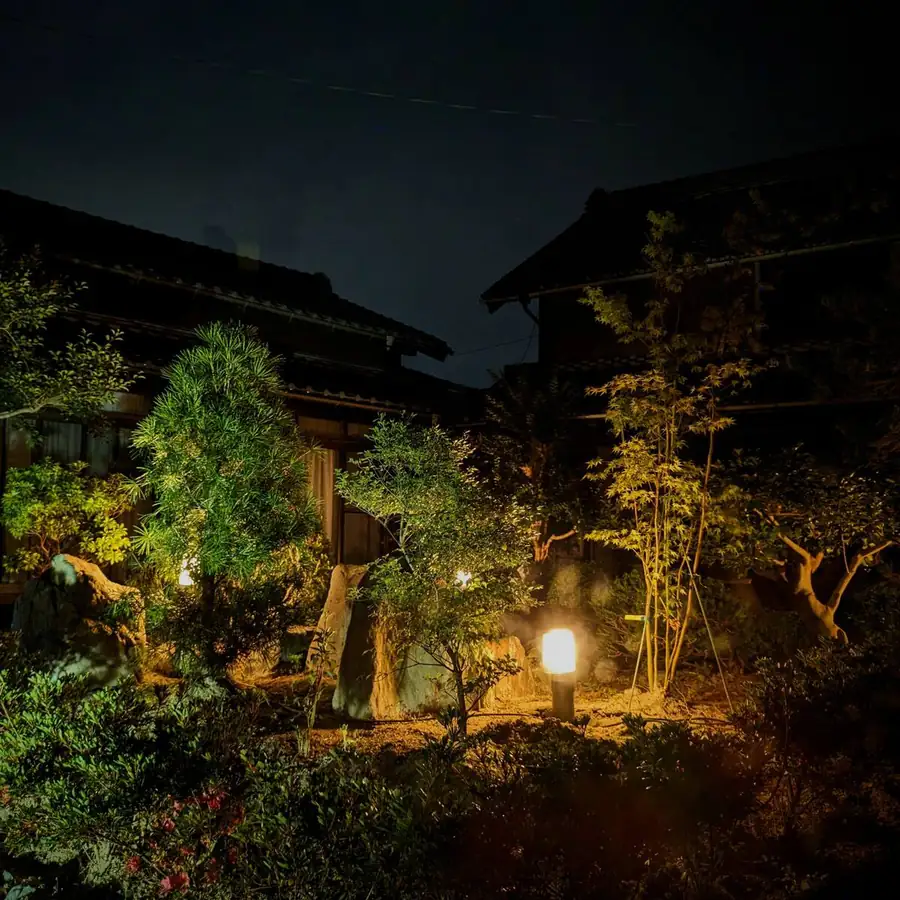
- 21:00A quiet night — the lit-up garden and the sounds of the fields.
- 7:00Café breakfast — nearby cafés serve "morning" from 6:30. Check out at 11:00 and head out to explore Aichi.
Taste local life
Café "morning"
Order a drink and toast comes with it — an Aichi morning ritual. The closest café is about 5 min by car.
Miso nikomi udon
Udon simmered in rich miso, a specialty of miso-loving Aichi. Our pick is about 12 min by car.
Nagoya Cochin oyakodon
The host's favorite, at Tori Sanwa in Kariya Highway Oasis (7 min).
Old-school Japanese sweets
Sanjuen, founded in 1865, about 7 min by car — its baumkuchen is popular too.
Our guest guide lists nearby restaurants, cafés and supermarkets, with opening hours.
Sources: Japan Meteorological Agency normals for Nagoya, 1991–2020 (via weather.time-j.net); Aichi Now, Aichi Prefecture's official tourism site (Kariya Mando Festival, Korankei katakuri, Korankei Momiji Festival and Obara Shikizakura Festival 2026); Walkerplus (Kariya Wansaka Festival); Nabana no Sato official site and Kankomie (illumination period and highlights); Ise Jingu official site (visiting hours). Information as of November 2026.
Ready to plan your stay?
See prices and open dates for your group on Airbnb. Up to 5 guests, 2 free parking spaces.
Check dates on AirbnbBooking, payment and support are handled by Airbnb.