
Autumn
Korankei by car: autumn leaves, timed to miss the crowds
About 4,000 maples, two rivers and a red bridge in the hills of Toyota — and a famous traffic jam on November weekends. Here is how to see Korankei at its best: when to come, where to park, what to walk, what to eat, and when to head home.
Check dates on Airbnb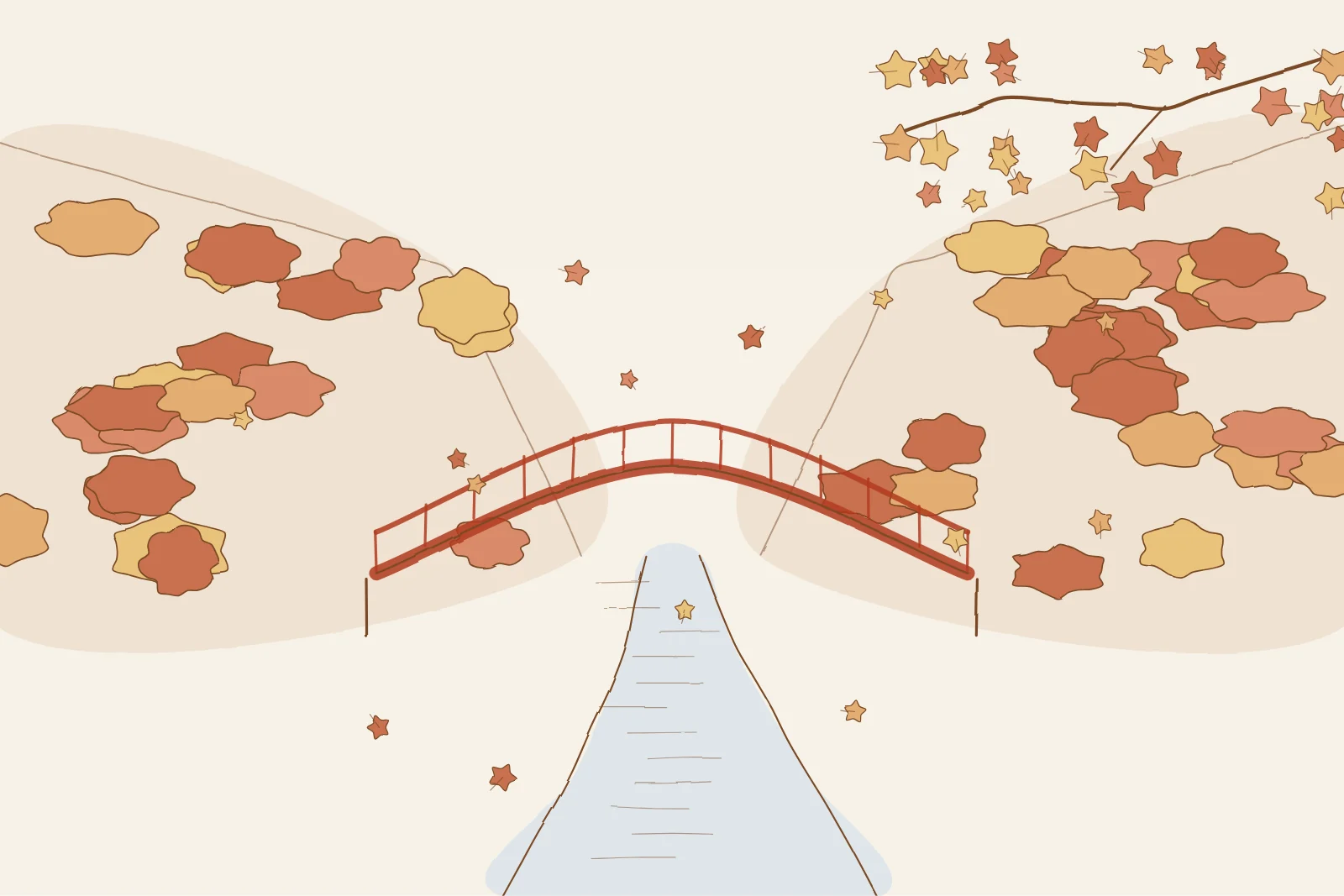
Why Korankei is worth the drive
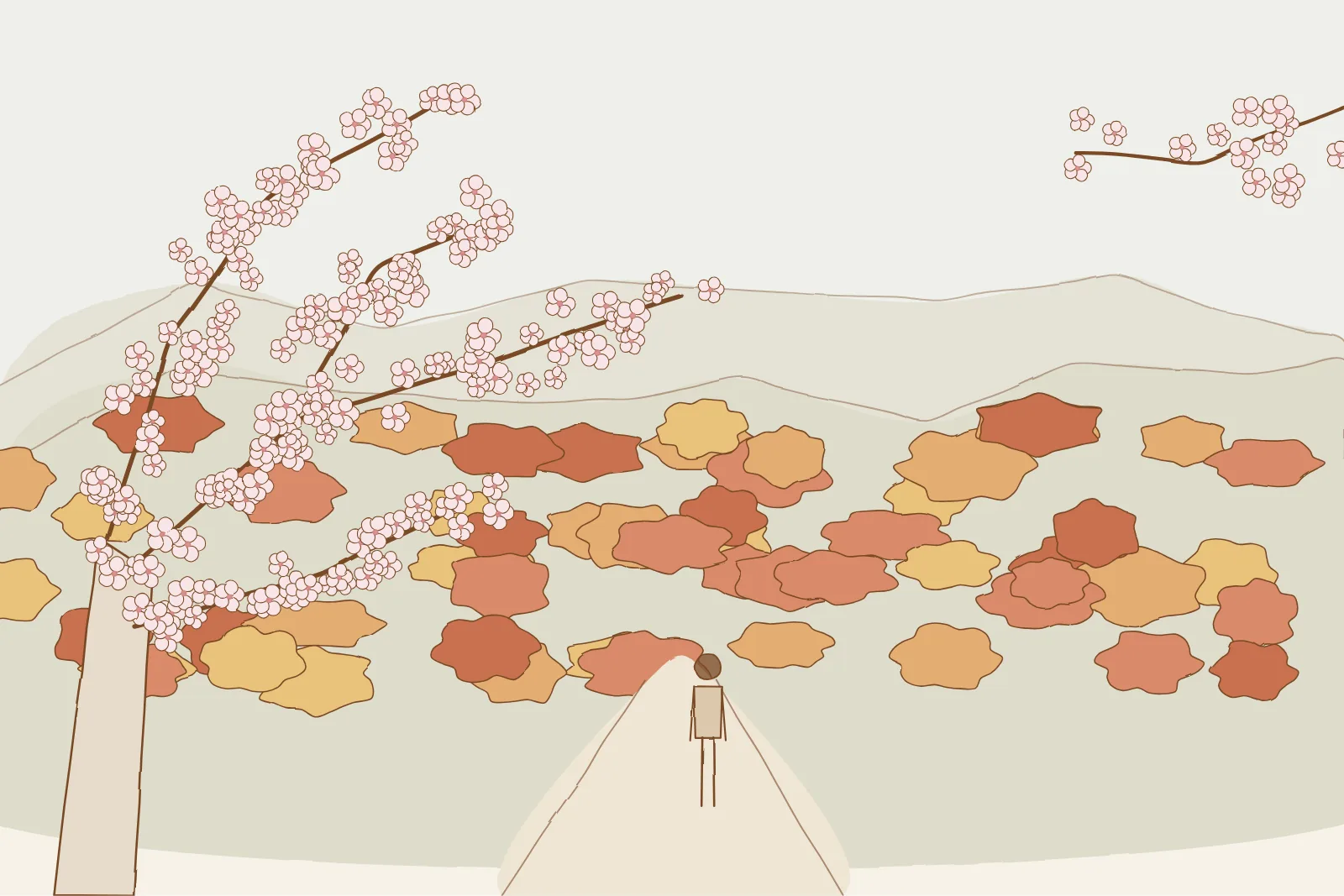
Korankei is a gorge in Asuke, a mountain town in the east of Toyota City, where the Tomoe and Asuke rivers meet. Some 4,000 maples of around eleven kinds climb from both riverbanks to the top of Mount Iimori, so in November the whole valley turns red, orange and gold at once.
It is also one of the easiest great autumn spots to reach by car from Hanaike: about 45 minutes, with no train changes and no bus queues. Kyoto is two hours the other way. If your trip lands in November, this is the one to put in the plan.
A fair warning first: Korankei is no secret. On peak weekends the road into Asuke slows to a crawl. The good news is that the crowd follows a very predictable rhythm — so with a little timing you can have the riverbank almost to yourself.

2026 dates, peak colour and the light-up
- Festival: the Korankei Momiji (maple) Festival runs from 1 to 30 November 2026
- Peak colour: usually mid to late November. Early November is greener, with the first reds on the higher slopes
- Light-up: every evening in November, from sunset until 9 PM
- Entry: walking around the gorge is free; you pay only for parking
- Weekend extras: on festival weekends, Kojakuji temple is lit with bamboo lanterns and there are candles you can light with a wish
Leaves are a living thing, so the "peak" moves a little each year. If you have a choice of dates, aim for the second half of November and keep a flexible day in your plan.
The crowd plan: when to arrive
On peak weekends, traffic on Route 153 into Asuke builds as the morning goes on, and the car parks fill by the time the stalls are busy at lunch. So the calm windows are weekdays and early mornings.
- Best: a weekday, arriving early in the morning. Mist still sits on the river, the light is soft and the paths are quiet
- Good: a weekend, arriving early. Leave Hanaike at first light and you are in Asuke before the queues build
- Harder: a weekend arrival from late morning onwards, or driving in for the light-up on a Saturday. Expect slow traffic on Route 153 and a wait for parking
Our tip
Have a Nespresso at the house before you leave, walk the gorge while it is quiet, then have a late breakfast in Asuke. You will be heading home just as the traffic arrives.
Getting there from Hanaike, and parking
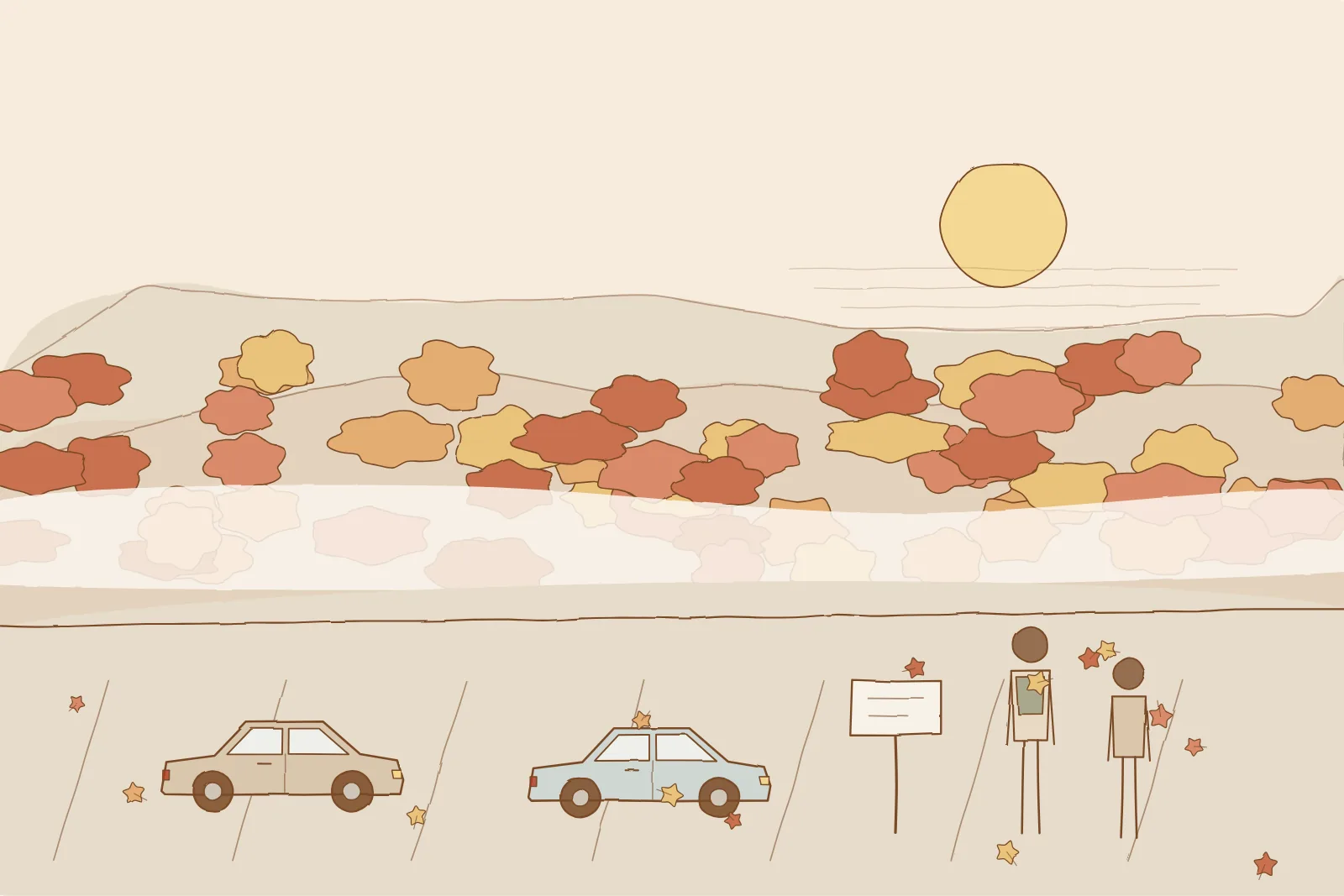
Korankei is about 45 minutes from Hanaike Retreat. The usual approach is the Tokai-Kanjo Expressway to Toyota-Kanpachi IC, then about 13 km on National Route 153 into Asuke. All interchanges on the Tokai-Kanjo Expressway are ETC-only, so make sure your rental car has an ETC card inserted.
- Parking: the car parks at the gorge are first come, first served — ¥500 a visit, or ¥1,000 in November
- Festival overflow: temporary car parks open during the festival
- Last stretch: almost all the waiting happens on Route 153 near Asuke, not on the expressway
Coming back, there is no need to stay for the light-up. Leave in daylight and you avoid the evening wave of cars arriving for the lanterns; stay for them, and allow extra time on Route 153.
What to see: a 2–3 hour walk
- Taigetsu-kyo bridge: the red bridge where the two rivers meet, and the symbol of Korankei. Cross it once, then look back at it from the riverbank
- The riverside path: the road along the Tomoe River has grown into a tunnel of maples. Walk it slowly — the best colour is often overhead
- Kojakuji temple: the temple whose monk began it all (more below). The approach climbs a little, so wear comfortable shoes
- Mount Iimori: the maples run up to the summit. Climb a little way for a view down over the valley
- Sanshu Asuke Yashiki: a recreated farmhouse village beside the gorge (next section)
The monk who planted a valley
The story of Korankei begins in 1634. Sanei, the eleventh head priest of Kojakuji, is said to have planted maples and cedars along the approach from the river to his temple, reciting a sutra with each one. Local people kept planting in the early 20th century, and the gorge was given the name Korankei in 1930 — "ko" from the temple's name, "ran" for the mist that rises from the valley.
Knowing that makes the walk feel different: nearly four centuries of people adding a tree here and there, until a whole hillside turns red each autumn.
Sanshu Asuke Yashiki: an old country home, still working
Right next to the gorge, Sanshu Asuke Yashiki recreates the house and outbuildings of a well-off farming family from the late 19th to early 20th century. It is not a museum of glass cases: craftspeople work here, making paper umbrellas, dyeing with indigo, weaving and forging iron.
- Admission: adults ¥300, children ¥100
- Hours: 9:00–17:00 (last entry 16:30). Usually closed on Thursdays, but open every day in November
It is a good stop for children, and a calm one when the riverbank is busy.
What to eat: gohei-mochi and the festival stalls
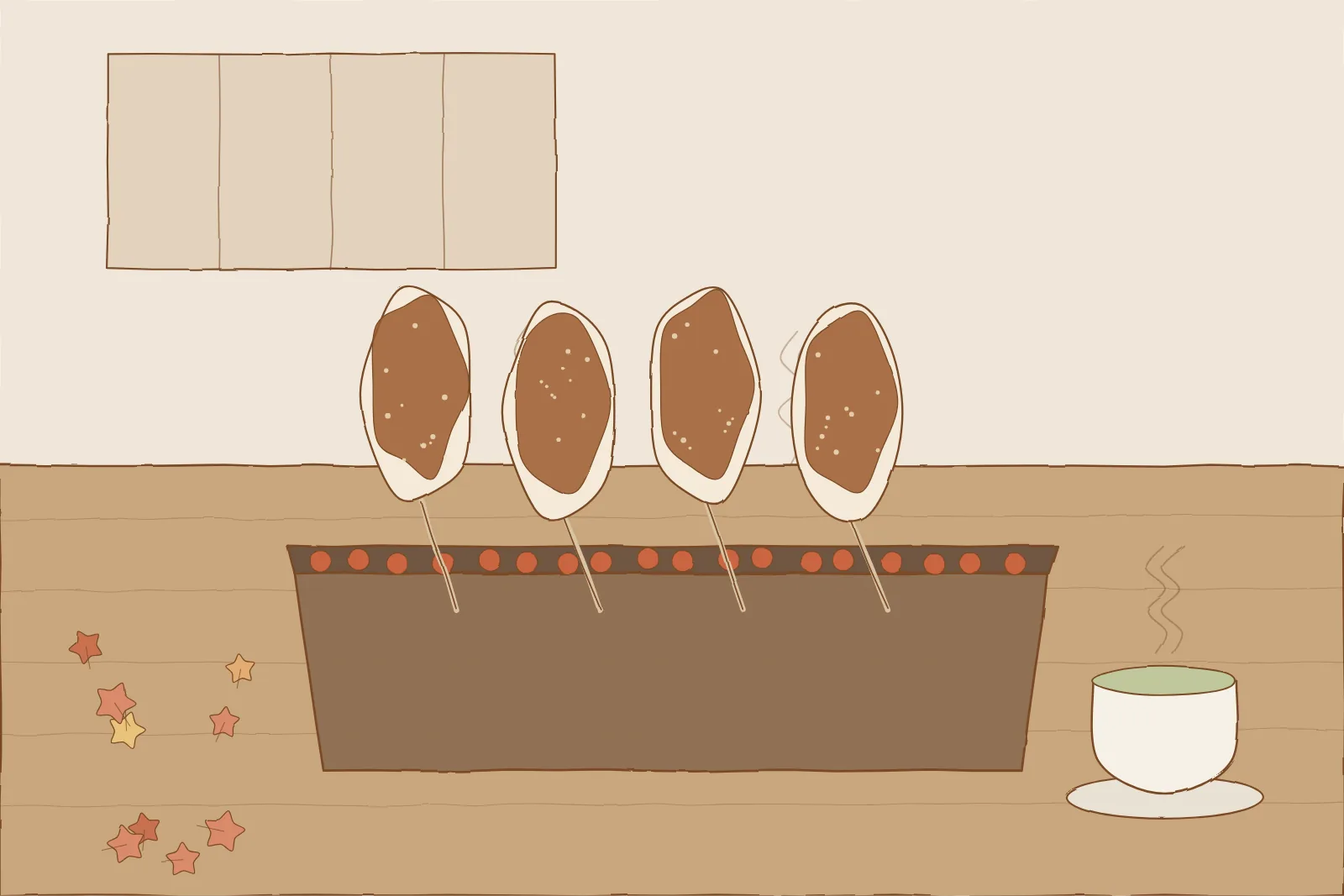
The taste of Korankei is gohei-mochi: flattened rice cakes on a wooden skewer, brushed with a sweet miso sauce and grilled until they smell of toasted rice. It is a local food of the Toyota area, and during the Momiji Festival you will find it all around Asuke — including at the teahouse inside Sanshu Asuke Yashiki.
Along the river, festival stalls sell snacks and hot drinks. Eat early or late: around noon on weekends the queues are long.
Make a day of it: Asuke town and the autumn cherries
Asuke's old streets. Just north of the gorge, Asuke was a post town on the old salt road that carried salt from the Mikawa coast up into the mountains of Shinshu. Its merchant houses, white walls and narrow lanes are a nationally protected historic district and feel far quieter than the riverbank.
Obara's four-season cherry blossoms. In Toyota's Obara district, a cherry variety called shikizakura flowers in spring and again in autumn. The autumn bloom runs from late October to early December and is usually best in mid to late November, when its pale blossoms appear alongside red maples — a sight you will not see in many places. The 2026 Obara Shikizakura Festival runs from 21 November to 6 December. Parking is paid.
A relaxed Korankei day from Hanaike
- 6:30 Leave Hanaike after a Nespresso at the house (or stop for a café "morning" — the nearest café opens at 6:30)
- 7:30 Park, and walk the riverbank and Taigetsu-kyo bridge while it is quiet
- 9:00 Sanshu Asuke Yashiki opens; then gohei-mochi and a wander through Asuke's old streets
- 11:30 Drive out before the midday traffic peaks — or carry on to Obara for the autumn cherry blossoms
- Afternoon Back at the house to rest. A hot spring 7 minutes away is a good way to end a day of walking
Prefer the lanterns? Do it the other way round: a slow morning, an early afternoon start, and the light-up after dark. Just expect more traffic on the way in and allow plenty of time.
Good to know
- Is Korankei only worth it in November?
- Autumn is the star, but in late March to early April the hillsides bloom with katakuri, a small purple spring wildflower, and the gorge is green and peaceful in summer.
- Is it OK with small children or a pushchair?
- The riverside paths are fine; the temple approach and hill paths have steps and slopes. A baby carrier is easier than a pushchair at peak times.
- Can we go by public transport?
- Yes, by train and a bus of about an hour from Josui Station, but with a car from Hanaike you have far more control over timing — which is the whole secret here.
Ready to plan your stay?
See prices and open dates for your group on Airbnb. Up to 5 guests, 2 free parking spaces.
Check dates on AirbnbBooking, payment and support are handled by Airbnb.
More guides
 ItineraryA 4-day Nagoya & Aichi road trip, day by dayAichi's big sights are scattered: Ghibli Park in the wooded hills, LEGOLAND on the waterfront, two castles in two different cities. That is exactly why a car and one quiet base work so well. Here is a full four days with three nights at Hanaike Retreat — timings, drives, parking, food, and the swaps we'd make for rain, small children or grandparents.Driving guideDriving in Japan as a visitor: a practical Aichi guideAichi is one of the easiest places in Japan to start driving: wide roads, good expressways and plenty of parking outside the city. This guide follows the order you'll meet things in — the paperwork, the rental desk, the toll gate, the first stop sign, the petrol pump and the last narrow lane to your door.
 Local foodEat like a local: café 'morning', Nagoya food and a miso breweryOrder a coffee and breakfast arrives with it. A clay pot of udon still bubbling at the table. Wooden vats crowned with mountains of river stones. This is how to eat your way around Aichi from the house — no food-tour booking required.
Sources: Asuke Tourism Association via Tripa (2026 festival dates, light-up, bamboo lanterns and wish candles, history); Aichi Now, Aichi Prefecture's official tourism site (about 4,000 trees, parking ¥500 / ¥1,000 in November, katakuri, Obara Shikizakura Festival 2026); Rurubu (peak period, 11 maple types, Route 153 distances, temporary parking, Sanshu Asuke Yashiki fees and hours, Asuke townscape); Tabi-mag (1634 planting, Taigetsu-kyo, Mount Iimori, name in 1930); Aichi Prefecture (gohei-mochi); NEXCO Central Nippon (ETC-only interchanges). Drive times are Google Maps estimates (October 2026). Information as of November 2026.