
Culture
Staying at a village headman's estate near Nagoya: what it's really like
Hanaike Retreat is a renovated guesthouse on the grounds of a village headman's house more than 100 years old, where the same family still lives. Here is an honest picture of a stay, from the moment you park to your last morning coffee.
Check dates on Airbnb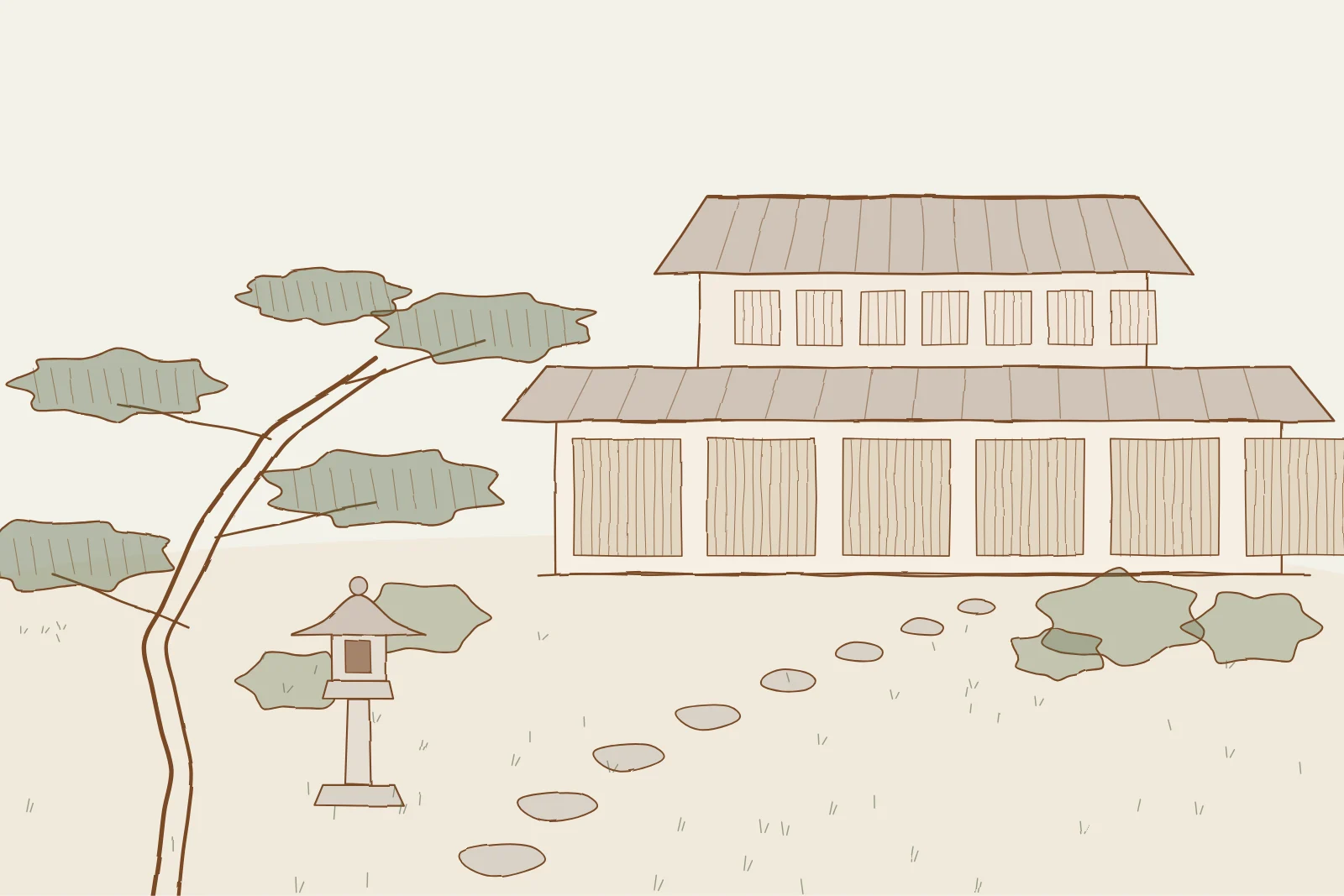
First, what was a village headman?
In Edo-period Japan (1603–1868), every farming village had a headman. In western Japan he was called shoya; in the east, nanushi. He was the lord's administrator on the ground and the village's voice in return: he gathered the annual rice tax, kept the population registers and paperwork, passed on official orders and negotiated with neighboring villages. Early on the post was often hereditary; from the mid-Edo period, many villages chose their headman by vote or recommendation, and some even rotated it year by year.
Here, the headmen came from the Kondo family, in what is now part of Kariya, central Aichi. Their main house, more than 100 years old, still stands across the garden, and the people who welcome you are their descendants. It is a home first and a place to stay second, and that quietly shapes everything about a visit.
The map that was hidden in the house
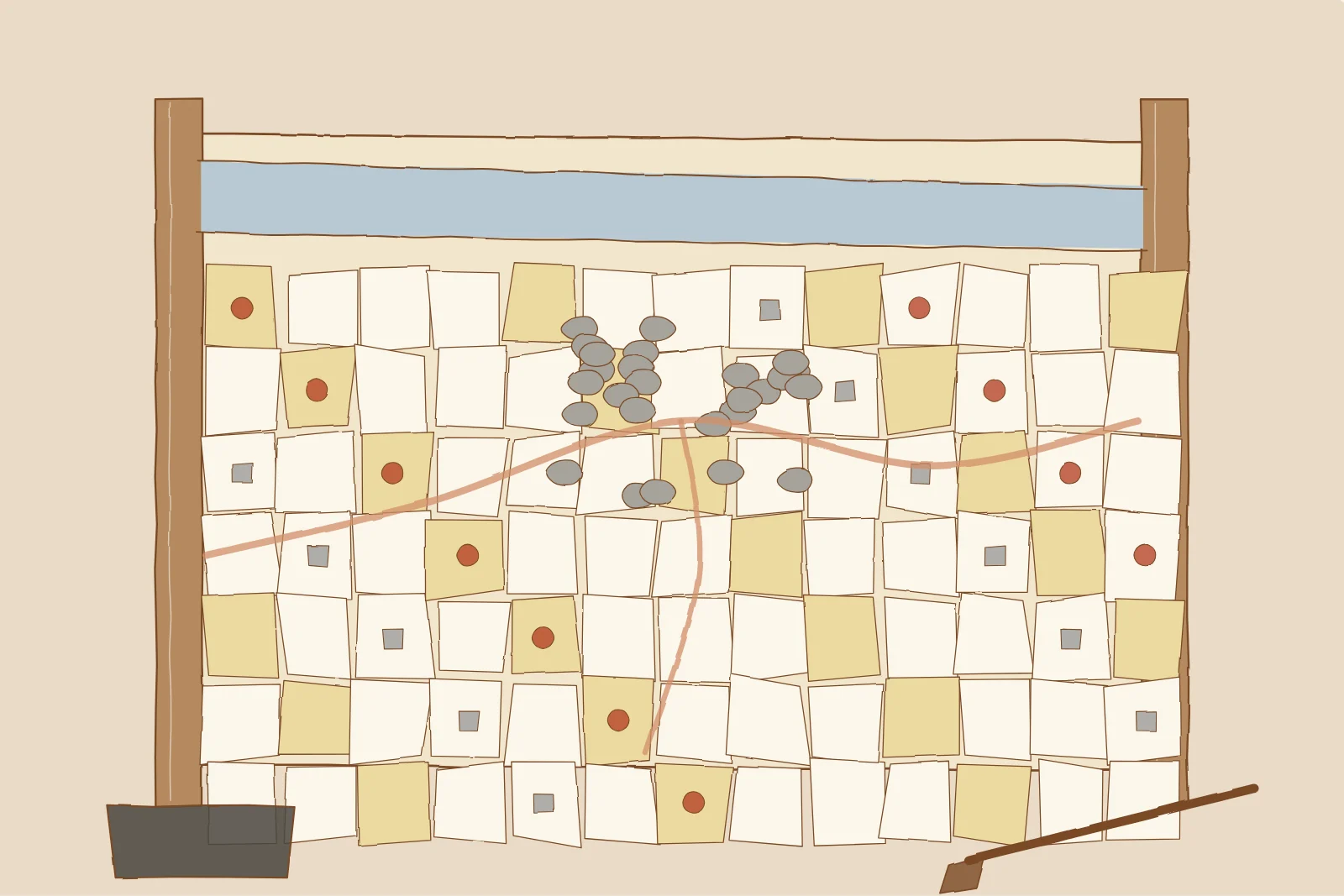
About 50 years ago, a hand-drawn map dated 1862 turned up inside the main house. It was drawn by Wasuke, the headman at the time and an ancestor of today's hosts. It shows things only villagers were meant to know, such as hidden rice fields, and a note that came with it reportedly warned that it was not to be shown to the domain's officials.
The original is now kept at the Kariya City Museum of History, so you won't see it at the house. What you will do is sleep on the land it shows. Our history page zooms into six details of the map, from rice fields that paid tax to two different lords to the river that once marked the border with Owari Province.
Where you actually sleep
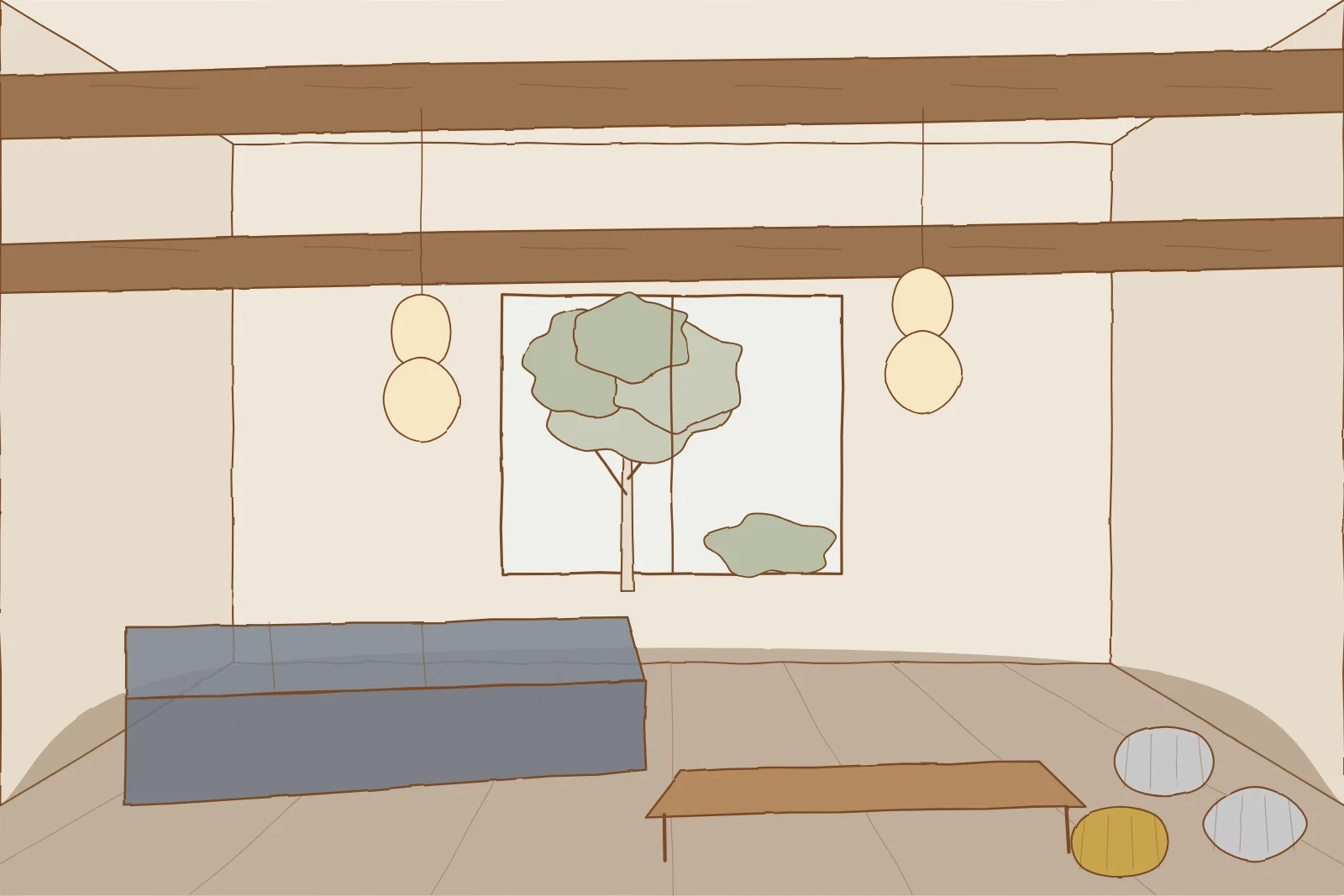
To be clear from the start: you don't sleep in the old house. Your stay is in a separate guesthouse across the garden, renovated by a local builder with insulation and airtight windows, so it stays warm in winter and quiet at night. Inside, calm Japanese style meets Scandinavian simplicity: high exposed beams, warm wood, paper lanterns and a big window onto the garden.
- Ground floor: living and dining room, kitchen, a tatami room with three futons, and the bath and washroom
- Upstairs: a bedroom with two semi-double beds and blackout curtains
- All yours: up to 5 guests, no shared spaces, and free parking for 2 cars by the house
The tatami room opens onto the living room, and a roll-down screen separates the two when someone wants an early night. The futons wait in the closet. Laying them out yourself on the tatami is a small, very Japanese ritual, and at checkout you can simply leave them where they are.
Ten minutes inside the main house
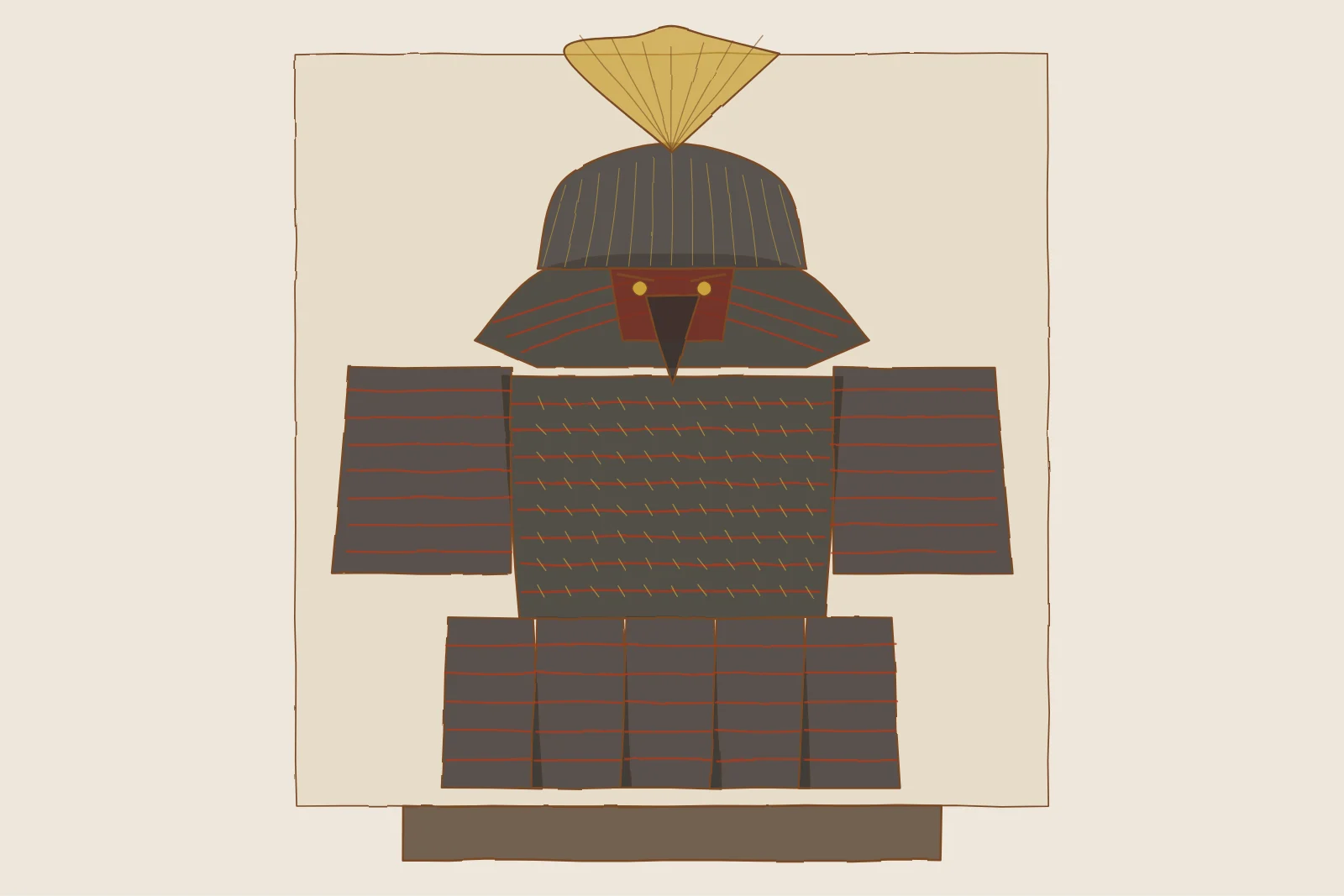
Check-in is self-service: the key waits in a key box, and the code arrives by Airbnb message. The hosts live in the main house opposite. When they are home, ring the intercom: on request they'll show you the main house's tatami room, the hina dolls and the crow tengu armor, in about ten minutes, no booking needed. Guests often mention it as a highlight of their trip. If you'd rather keep to yourselves, that's perfectly fine too.
The crow tengu armor. Tengu are supernatural beings from Japanese folklore, and the crow tengu (karasu-tengu) is the beaked, bird-like kind. This suit of armor brings one to life with uchidashi, the old technique of shaping metal sheets by hammering them. The beak, eyes, brows and forehead ornament are all beaten from metal, the eyebrows and nose hairs were set by hand, and the crest is a fan, long linked with tengu and their power over the wind.
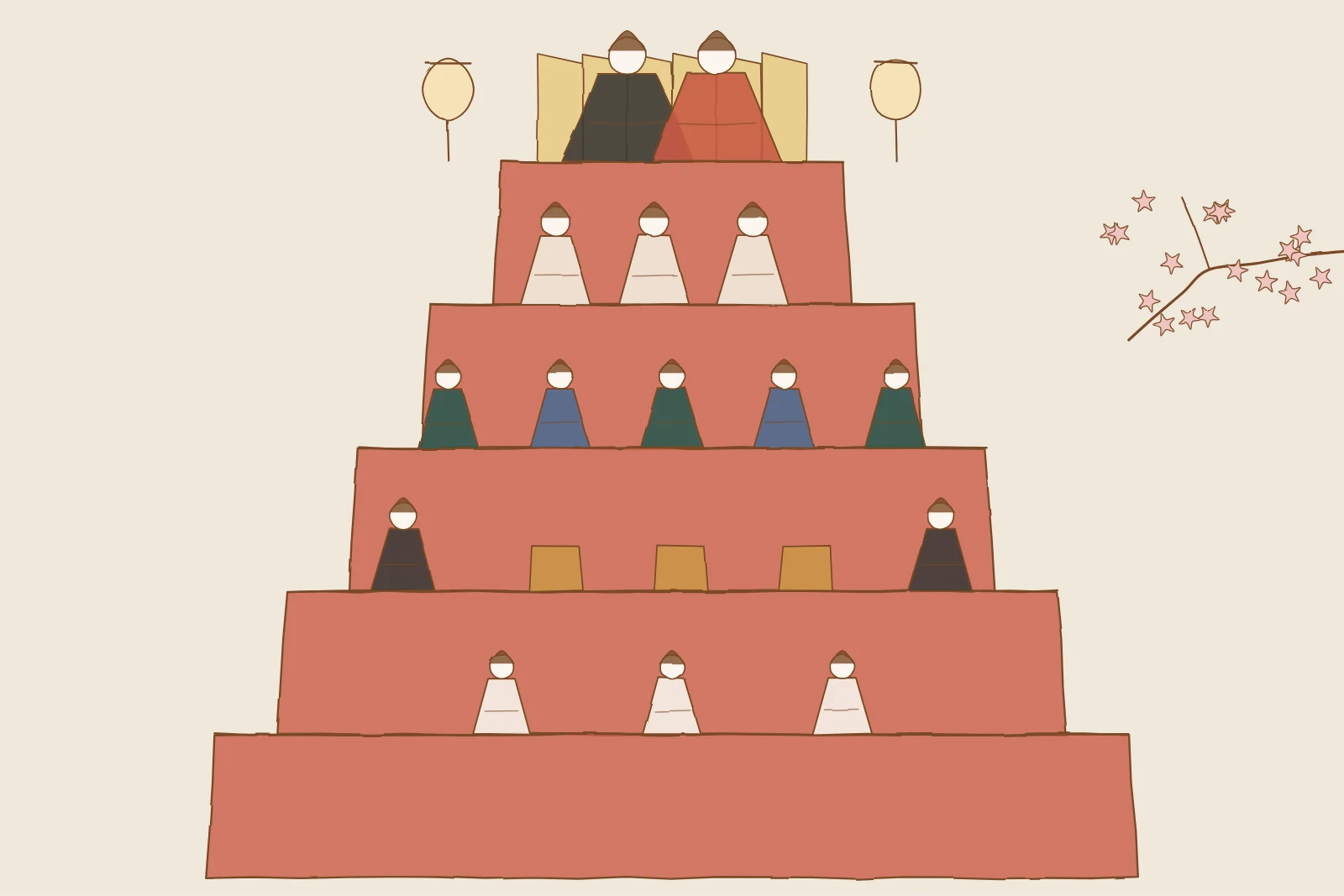
The hina dolls. The hosts can also show you hina dolls on the tour. Hinamatsuri, the Doll Festival on 3 March, is when Japanese families wish their daughters health and happiness. The dolls are believed to take on misfortune and keep the girl safe, so each year around that day, families with daughters set them out on tiers. A full display recreates the imperial court: the emperor and empress at the top, then three court ladies, five musicians, the ministers on either side, then three servants, with miniature furniture below.
The garden, from afternoon to night
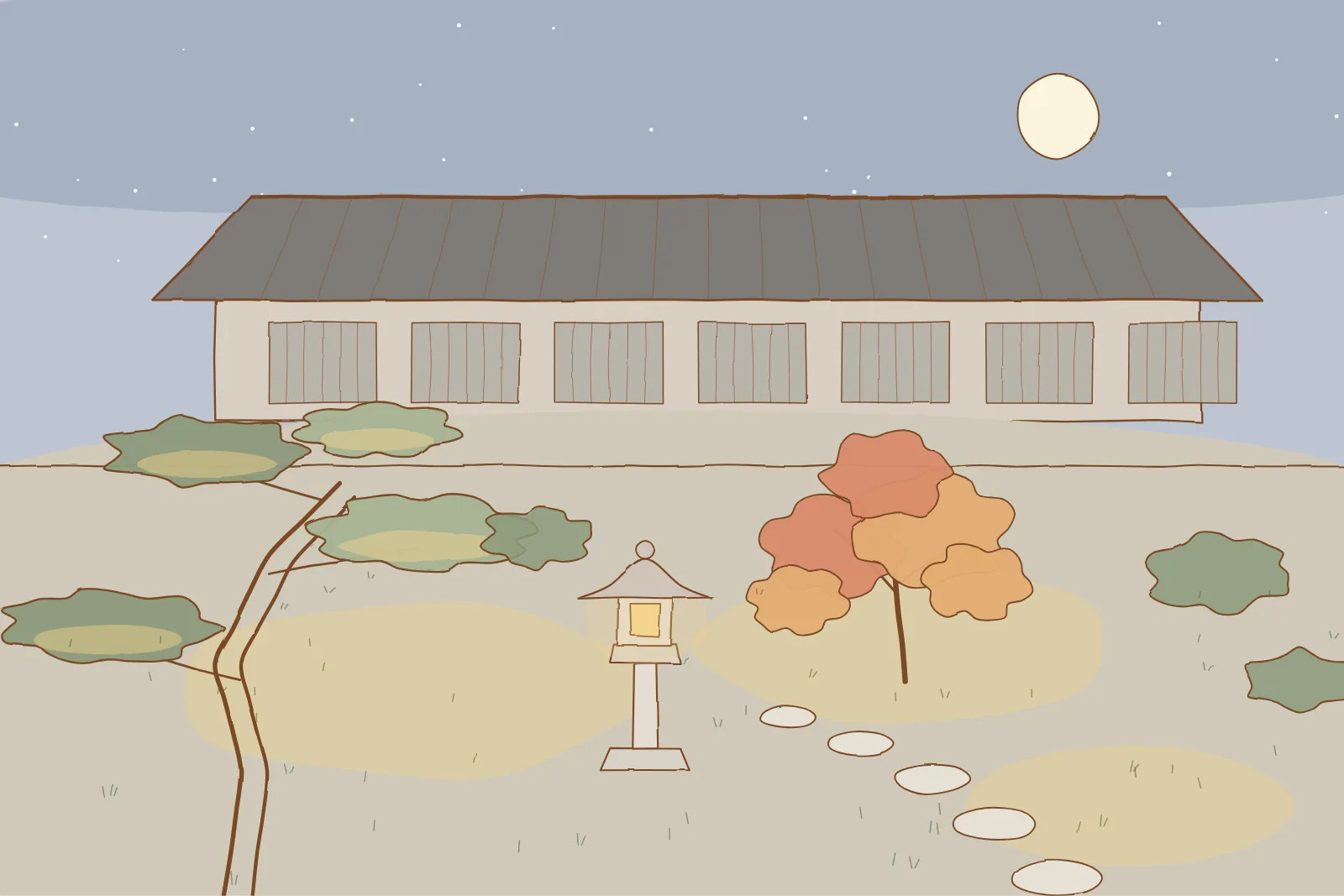
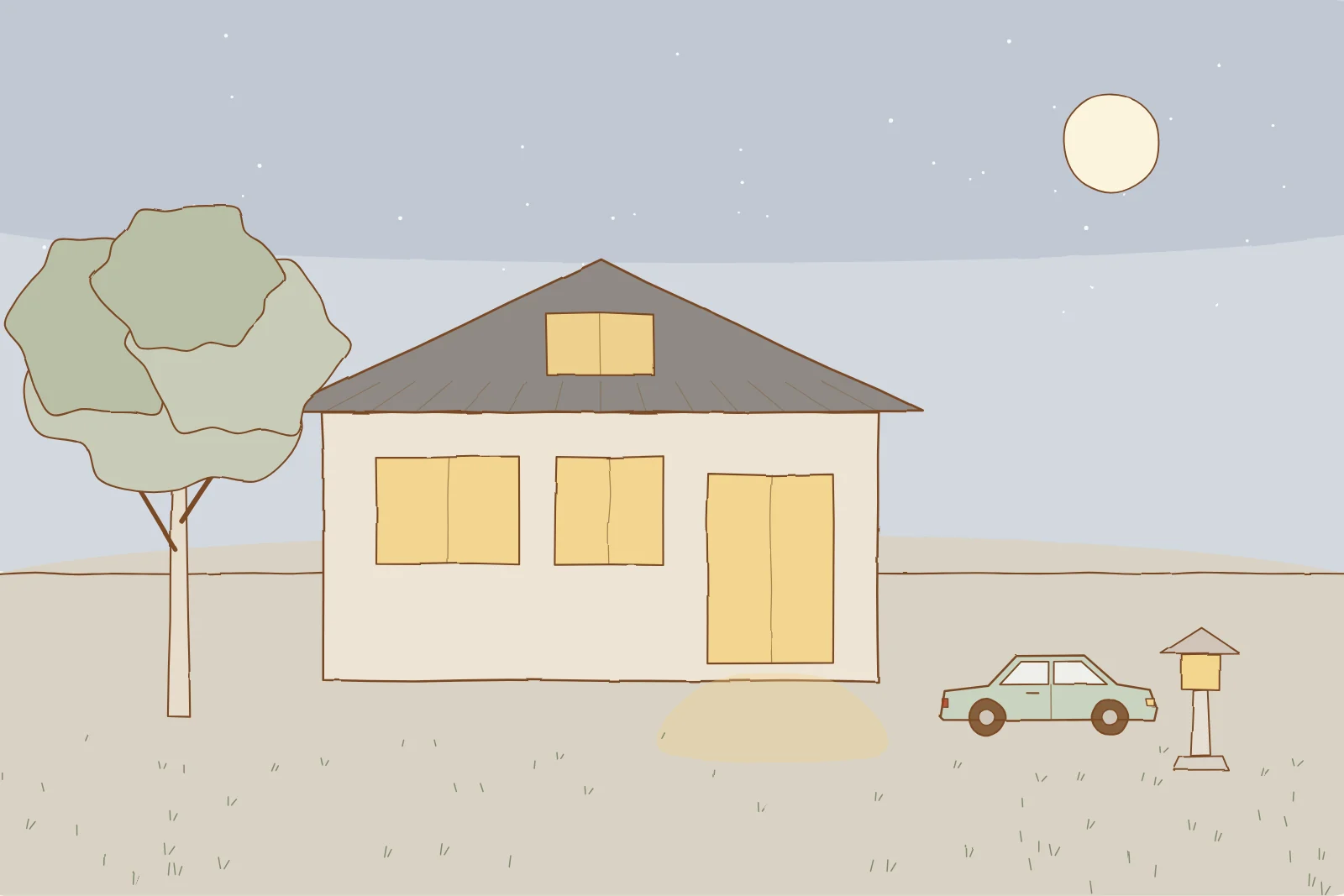
The Japanese garden between the two houses is the view from your window, and it changes through the day and the year. In the afternoon it is the backdrop to a Nespresso by the window. After dark, lights come on among the trees, the garden turns into something like a quiet stage, and the only sound is the rice fields around you.
Across the seasons it shifts again: deep green in summer, bright color in autumn, and in winter clear air that makes every branch look drawn in ink. Snow is a rare stroke of luck, a few days a year at most.
The residents
You may spot a cat or two on the stepping stones. They're the family's cats: they live on the grounds and never come into the guesthouse.
A morning walk across the old map
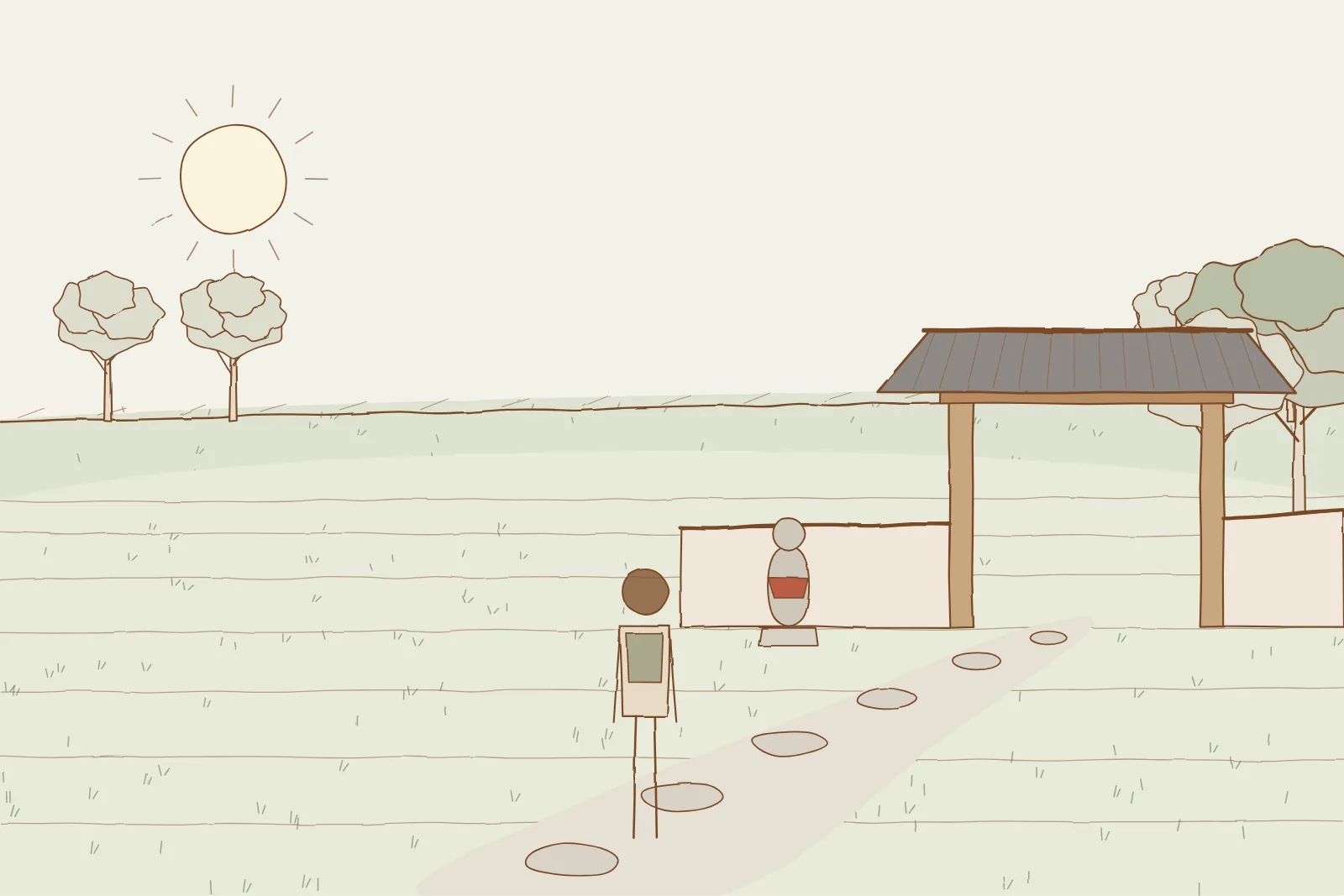
The neighborhood on the 1862 map is still small enough to walk. An easy loop of about 2 km takes around 40 minutes, best done early while it's cool:
- Kannonji Temple (1 min): the Soto Zen temple right next door. Its main hall carries a plaque written by the Edo painter Ike no Taiga.
- Eifukuji Temple (about 7 min): said to date from 1502, and the place where fireworks lit up the Akiba fire-god festival in 1869, as Wasuke noted in his diary of village events.
- Sakai Shrine (next door): legend says the Sakai clan, top retainers of the Tokugawa shoguns, came from here.
- Sakai River embankment: the far bank is Toyoake, once Owari Province. You are standing on the old border between Mikawa and Owari.
- Chozenji Temple (about 10 min): a Pure Land temple said to have been founded in 1519.
Temples and shrines here are places of prayer for local people, not attractions, so keep voices low and step lightly.
Not a ryokan, not a hotel
It helps to know what you are choosing. A ryokan usually includes dinner and breakfast, often a multi-course kaiseki meal. Staff lay out your futon while you eat, and you wear a cotton yukata to a large shared bath. A city hotel gives you a room and a front desk. Hanaike gives you a house.
| A typical ryokan | Hanaike Retreat | |
|---|---|---|
| Meals | Dinner and breakfast usually included | Your own kitchen; cafés and local restaurants 5–10 minutes by car |
| People | Staff serve meals and prepare your room | Hosts live next door; Airbnb messages usually answered within 2 hours |
| Bath | Large shared bath, often hot-spring water | A compact private bath; a natural hot spring 7 minutes by car |
| Bedding | Futons laid out for you | Two semi-double beds upstairs and three futons you lay out |
| Space | A guest room along shared corridors | The whole house, with a garden view, for up to 5 |
If you love the idea of a ryokan dinner, book one for a night in Gero or Takayama and spend the other nights here.
House manners, made easy
Staying on a family's grounds comes with a few customs. None of them are hard, and most are simply how Japanese homes work.
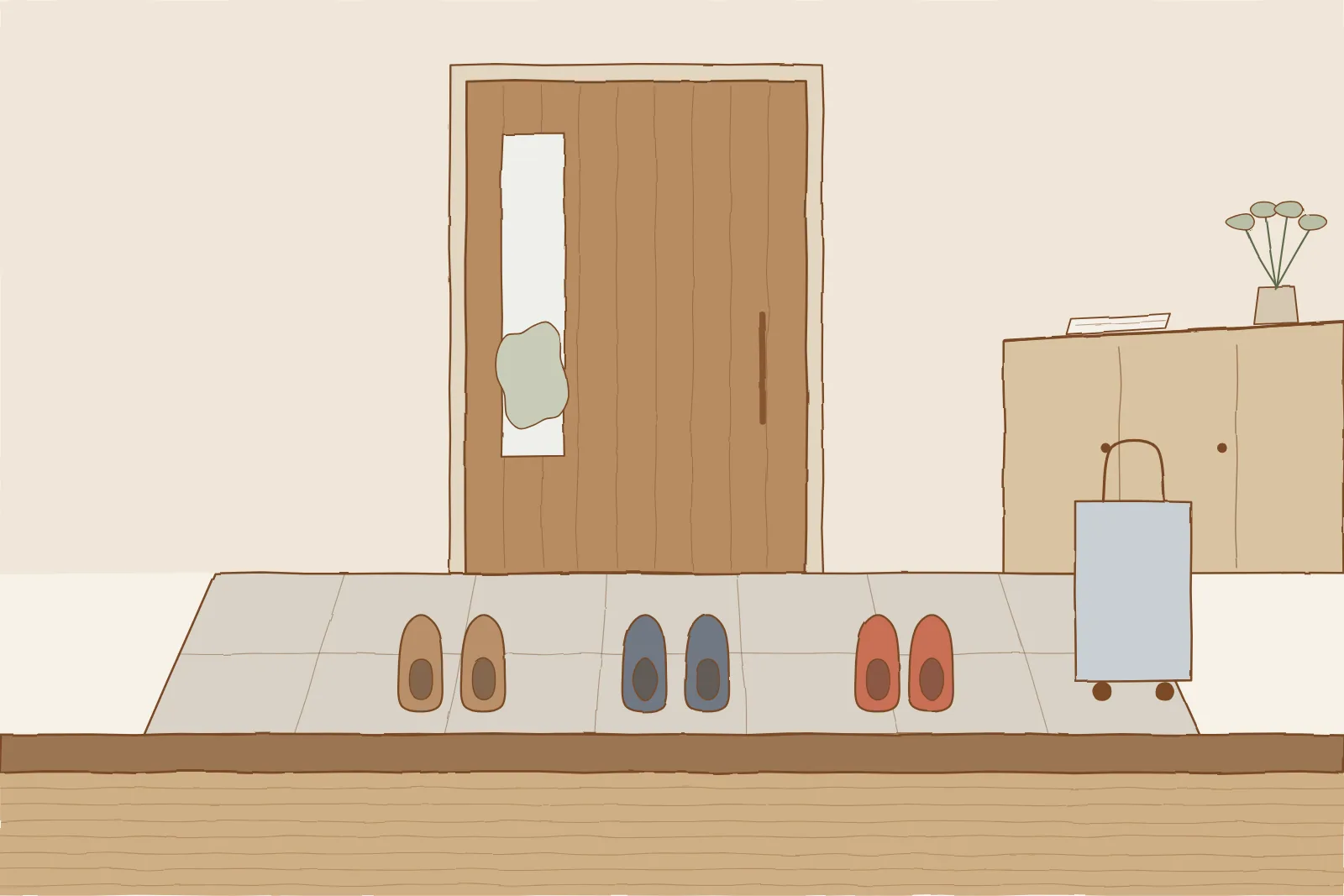
- Shoes off at the entrance. Leave them in the lower entry area (the genkan) and step up in socks. Turning them to face the door is a nice touch.
- Nothing but socks on tatami. In Japan, slippers never go on tatami; socks or bare feet only.
- Hot water on, hot water off. The water heater runs on kerosene and burns while it is on. Switch it on in the kitchen before a bath or washing up, and off when you go out.
- Quiet after 9 PM. Country nights carry sound a long way. Keep music low and close the windows later in the evening.
- Gentle cooking. The IH stove is fine. Please skip tabletop grills or anything that fills the house with smoke or strong smells.
- Laundry outside. The free washer-dryer is in a laundry room just outside the front door, and washing dries on the upstairs balcony rather than indoors.
- Screens down. This is the countryside: close the insect screen whenever you open a window. Insect repellent is provided.
- One door stays shut. An upstairs sliding door leads to the family's storage; please leave it closed.
Checking out is just as simple: wash the dishes (no need to dry them), switch off the heater and air conditioning, close the windows, and let the hosts know through the main-house intercom or an Airbnb message. Leave the futons laid out and the sorted rubbish where it is.
Who it suits, and who it doesn't
A good fit if you:
- are traveling by car and like coming home to quiet after a day out
- want a stay with a story, not a chain hotel
- enjoy a simple breakfast at home or a local café
- are a couple, a family with small children, or a group of up to five
Probably not for you if you:
- don't have a car; the nearest station is a long walk away
- want dinner served and a hot-spring bath in the building
- plan late, lively nights; the family lives next door
A slow evening, hour by hour
- 15:00 Arrive, park and unpack. A coffee with the garden in view.
- 16:00 Walk the temple loop while it's light, about 40 minutes.
- 17:30 Soak at the Kakitsubata natural hot spring, 7 minutes by car.
- 19:00 Dinner nearby, 5–10 minutes by car. Many places close around 9 PM, so go early.
- 21:00 Quiet hours: the lit garden and the sound of the rice fields.
- 7:00 Next morning, a café "morning": order a drink and toast comes with it. The nearest local café opens at 6:30.
- 11:00 Check out and head off across Aichi.
Quick answers
- Is it a traditional old house?
- The main house is over 100 years old and is the family's home. You stay in the renovated guesthouse on the same grounds: beams, tatami and a garden view, with modern insulation, a kitchen and a bath.
- Can we see inside the main house?
- If the hosts are at home, yes. Ring the intercom for a tour of about 10 minutes; no booking needed.
- Will we see much of the hosts?
- Only as much as you like. Check-in is self-service with a key box; the hosts live in the main house opposite, and Airbnb messages are usually answered within 2 hours.
- Are meals included?
- No. There is a full kitchen, supermarkets about 5–6 minutes away by car, and local cafés serving the Aichi-style "morning".
- Is it good for children?
- Yes. There is a baby chair, corner guards, books and toys, and little ones can sleep on futons in the tatami room.
- What time can we arrive?
- Check-in is 15:00–22:00. If you will be later, send a message ahead.
Ready to plan your stay?
See prices and open dates for your group on Airbnb. Up to 5 guests, 2 free parking spaces.
Check dates on AirbnbBooking, payment and support are handled by Airbnb.
More guides
 Local foodEat like a local: café 'morning', Nagoya food and a miso breweryOrder a coffee and breakfast arrives with it. A clay pot of udon still bubbling at the table. Wooden vats crowned with mountains of river stones. This is how to eat your way around Aichi from the house — no food-tour booking required.
 ItineraryA 4-day Nagoya & Aichi road trip, day by dayAichi's big sights are scattered: Ghibli Park in the wooded hills, LEGOLAND on the waterfront, two castles in two different cities. That is exactly why a car and one quiet base work so well. Here is a full four days with three nights at Hanaike Retreat — timings, drives, parking, food, and the swaps we'd make for rain, small children or grandparents.
 Road tripTakayama, Shirakawa-go and Gero Onsen by car: a Dragon Route road tripAichi sits at the start of the Dragon Route (Shoryudo), the tourism trail that winds north from central Japan through the mountains of Gifu to the Hokuriku coast. By car, three of its highlights — a hot-spring town, an old merchant town and a thatched-roof World Heritage village — fit neatly into two unhurried days.
Sources: Kariya City Museum of History (the 1862 map of Nishizakai Village; the historic walking route); Kotobank dictionary entries on nanushi/shoya (the role of village headmen and how they were chosen); japan-guide.com, Indoor Manners (shoes and tatami); Go Nagano, How to Stay in a Japanese Ryokan (ryokan meals, futons and baths). Shop hours as of October 2026.